Your Comprehensive Gold Guide for Jaipur: Understanding the Pink City's Precious Metal Market
Jaipur, the majestic Pink City, is not just a hub of vibrant culture, historical palaces, and exquisite gemstones; it's also a significant market for gold. For centuries, gold has held immense cultural, economic, and emotional value for the people of Jaipur and Rajasthan. Whether you're a local resident looking to invest, a tourist planning a purchase, or simply curious about the dynamics of gold in this royal city, this comprehensive guide will illuminate every facet of Jaipur's gold market. From daily price fluctuations to top jewellers and investment options, we cover everything you need to know about buying, selling, and understanding gold in Jaipur.
Why is gold price different in Jaipur?
The price of gold, while largely influenced by global trends, can exhibit slight variations from one city to another, and Jaipur is no exception. Several factors contribute to why gold prices might differ in the Pink City compared to other Indian metros:
- Local Taxes and Levies: While Goods and Services Tax (GST) is uniform across India, specific local levies or transportation costs can add marginal differences.
- Transportation Costs: Gold typically arrives in major ports and is then transported inland. The cost of transporting gold from these entry points to Jaipur can subtly impact its final price.
- Local Demand and Supply: Jaipur, being a major wedding and festive destination, experiences peaks in gold demand. High local demand can sometimes lead to a slight premium.
- Operational Costs of Jewellers: The overheads, rent, and operational costs of jewellers can vary, which might be reflected in their pricing, especially in the 'making charges'.
- Market Competition: Jaipur has a highly competitive gold market, particularly in areas like Johari Bazaar. This competition can sometimes drive prices down, especially making charges, as jewellers vie for customers.
It's important to note that these differences are usually marginal, often just a few rupees per gram, but they are present due to the intricate interplay of local economic factors.
Which area or shop is famous for low making charges in Jaipur?
Finding gold with low making charges is a priority for many buyers in Jaipur, as these charges can significantly add to the overall cost. While it's crucial to prioritize authenticity and purity, certain areas and types of shops are known for competitive making charges:
- Johari Bazaar: This historic market is the heart of Jaipur's jewellery trade. While it houses some premium stores, many smaller, independent jewellers here offer competitive making charges due to high volume and intense competition. It's an excellent place to compare and negotiate.
- Gopalpura Bypass and Vaishali Nagar: These emerging commercial areas have several modern jewellery showrooms. While they might not always beat the absolute lowest prices of traditional markets, they often run promotional offers and have transparent pricing structures for making charges, which can be beneficial.
- Smaller, Independent Jewellers: Often, standalone shops or those with a long-standing local reputation, rather than large national chains, may offer more flexibility and lower making charges, especially if you have a relationship with them.
Tips for finding low making charges:
- Negotiate: Making charges are often negotiable, especially for larger purchases.
- Compare: Visit multiple shops before making a decision.
- Check for Schemes: Many jewellers offer schemes during festivals or off-peak seasons that reduce making charges.
- Consider Plain Gold: Simpler designs generally have lower making charges than intricate, handcrafted pieces.
Why do gold prices change daily?
The price of gold is highly dynamic, fluctuating on a daily, sometimes hourly, basis. This volatility is a reflection of its status as a global commodity and a safe-haven asset, influenced by a myriad of international and domestic factors:
- Global Economic Health: When the global economy faces uncertainty, recession fears, or market instability, investors flock to gold as a 'safe haven,' driving its price up. Conversely, a strong economy can lead to gold prices stabilizing or falling.
- Interest Rates: Higher interest rates make other investments (like bonds) more attractive, reducing demand for non-yielding gold. Lower interest rates, on the other hand, make gold more appealing.
- Strength of the US Dollar: Gold is primarily traded in US dollars. A stronger dollar makes gold more expensive for holders of other currencies, potentially dampening demand and vice-versa.
- Crude Oil Prices: There's often a correlation between crude oil and gold prices. Rising oil prices can fuel inflation concerns, prompting investors to buy gold as an inflation hedge.
- Geopolitical Events: Wars, political instability, trade disputes, and natural disasters can all trigger a surge in gold prices as investors seek security.
- Central Bank Policies: Central banks worldwide hold significant gold reserves. Their buying or selling activities, as well as monetary policies, can influence global gold prices.
- Indian Rupee-US Dollar Exchange Rate: Since India imports almost all its gold, the exchange rate plays a crucial role. A weaker rupee makes imported gold more expensive in local currency terms, even if international prices are stable.
- Import Duties: The Indian government periodically revises import duties on gold, which directly impacts its domestic price.
These factors combine to create a constantly shifting landscape for gold prices, making daily checks essential for buyers and sellers.
Gold rates in Jaipur (22 karat): How do prices change?
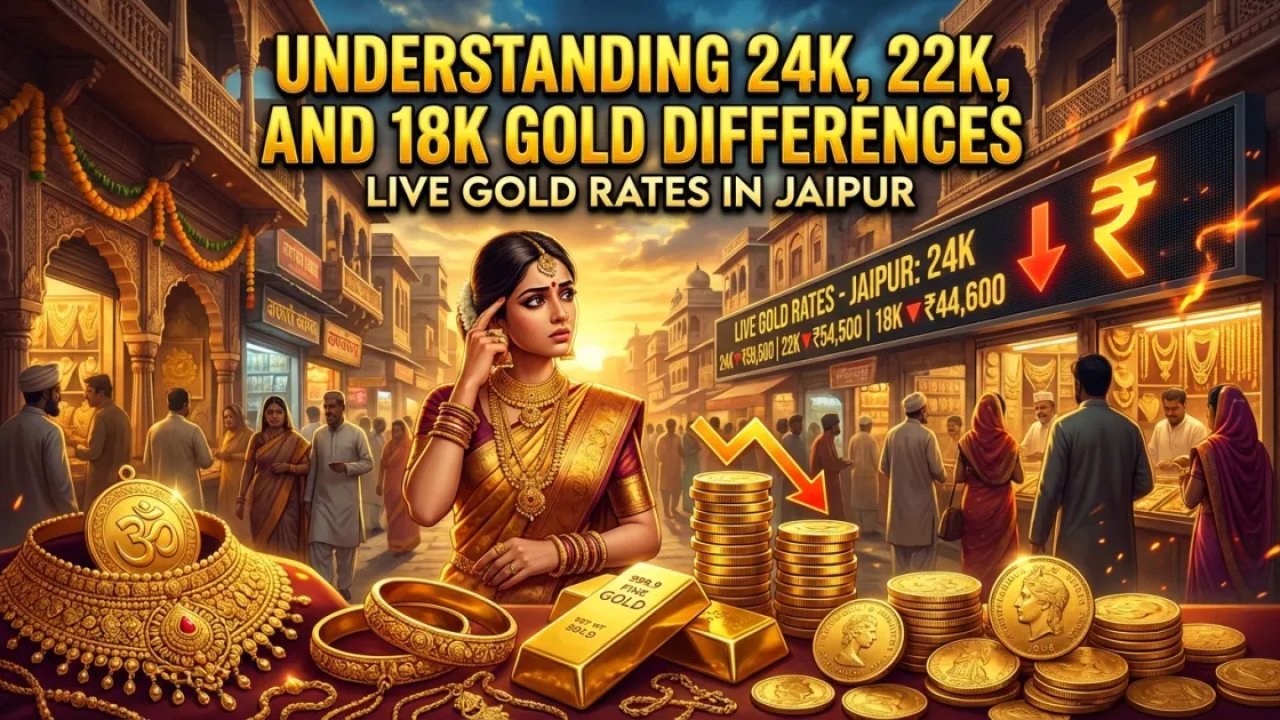
In Jaipur, as in most of India, 22 karat gold (91.6% purity, also known as 916 gold) is the most popular choice for jewellery due to its balance of purity and durability. The daily rates are determined by a sophisticated calculation:
- International Gold Price: This is the benchmark global rate, usually quoted in US dollars per troy ounce.
- Conversion to Indian Rupees: The international price is converted to Indian Rupees using the prevailing USD-INR exchange rate.
- Import Duty: The Indian government levies an import duty on gold, which is added to the converted price.
- GST (Goods and Services Tax): A 3% GST is applied to the value of the gold.
- Local Premiums/Discounts: Depending on local demand and supply, jewellers might add a small premium or offer a discount.
- Making Charges: These are the charges for crafting the gold into jewellery, typically a percentage of the gold's value or a fixed rate per gram. A 5% GST is also applied to making charges.
The final 22 karat gold rate you see advertised daily in Jaipur is the sum of these components, excluding making charges which are added at the time of purchase based on the specific jewellery piece. Prices are updated multiple times a day by jewellers and financial news outlets to reflect market changes.
Gold and hallmarking centres in Jaipur.
Hallmarking is a purity certification of gold articles, ensuring consumers receive the promised quality. In India, the Bureau of Indian Standards (BIS) is the authority for hallmarking gold jewellery, and it has become mandatory for all gold jewellery and artefacts since June 2021.
When buying gold in Jaipur, always look for the BIS hallmark, which comprises three essential marks:
- BIS Logo: A triangular mark.
- Purity in Carat and Fineness: E.g., 22K916 for 22 karat gold, 18K750 for 18 karat gold.
- HUID (Hallmarking Unique Identification) Number: A six-digit alphanumeric code unique to each piece of jewellery.
Jaipur hosts several BIS-recognized assaying and hallmarking centres. These centres are responsible for testing the purity of gold submitted by jewellers and applying the hallmark. Reputable jewellers in Jaipur will only sell hallmarked gold. You can find a list of BIS-recognized centres on the BIS website, ensuring transparency and trust in your gold purchases.
Top Jewellers in Jaipur.
Jaipur boasts a rich legacy of jewellery craftsmanship, offering a diverse range from traditional Rajasthani designs to contemporary pieces. Here are some of the top jewellers in Jaipur, known for their reputation, quality, and exquisite collections:
- Tanishq: A trusted name across India, Tanishq (from the Tata Group) offers a wide range of certified gold and diamond jewellery with transparent pricing and excellent customer service. They have multiple showrooms across Jaipur.
- Malabar Gold & Diamonds: Another national giant, Malabar is known for its extensive collections, commitment to transparency (Fair Price Promise), and a strong focus on hallmarked gold and certified diamonds.
- Joyalukkas: An international jewellery retail chain with a significant presence in Jaipur, Joyalukkas offers a vast selection of traditional and contemporary gold, diamond, and precious stone jewellery.
- Birdhichand Ghanshyamdas Jewellers: A heritage brand in Jaipur, renowned for its exquisite traditional Rajasthani jewellery, intricate craftsmanship, and high-end designs. They are a go-to for bespoke and heirloom pieces.
- Amrapali Jewels: Famous globally for its unique, traditional Indian jewellery with a contemporary twist, Amrapali is a luxury brand that celebrates India's rich heritage. While high-end, their designs are truly iconic.
- PC Jeweller: A well-established national brand offering a wide array of gold and diamond jewellery, known for competitive pricing and a strong retail presence.
When choosing a jeweller, consider their reputation, transparency in pricing (especially making charges), availability of hallmarked gold, and after-sales service.
Supply pressures pushing prices up.
Global supply and demand dynamics play a critical role in determining gold prices. Several factors on the supply side can exert upward pressure on gold rates:
- Declining Mine Production: Gold is a finite resource. While new deposits are discovered, the overall global gold mine production has shown signs of plateauing or even declining in recent years, making existing supply more valuable.
- High Cost of Extraction: Extracting gold becomes increasingly expensive as easily accessible deposits are depleted. Deeper mining operations or processing lower-grade ores lead to higher production costs, which are eventually passed on to the consumer.
- Environmental Regulations: Stricter environmental regulations and permitting processes for new mines can delay or prevent new supply from entering the market, thus limiting availability.
- Central Bank Purchases: Many central banks around the world have been increasing their gold reserves as a hedge against currency fluctuations and geopolitical risks. This consistent institutional buying adds significant demand pressure, reducing the free float of gold available in the market.
- Investment Demand: In times of economic uncertainty or high inflation, investor demand for gold as a safe-haven asset surges. This increased demand, without a corresponding increase in supply, naturally drives prices upwards.
These supply-side constraints, combined with robust demand from various sectors (jewellery, investment, industrial), contribute to the long-term upward trend in gold prices.
How to store gold in Jaipur?
Properly storing your gold is crucial for
Market Update: How Global Winds Shape Jaipur's Gold Prices
The glittering allure of gold in Jaipur, a city deeply rooted in its appreciation for the yellow metal, is currently navigating a complex global financial landscape. Recent weeks have seen international gold prices experience notable volatility, primarily driven by shifting expectations around global interest rates and persistent geopolitical tensions. As major central banks like the U.S. Federal Reserve signal a potential pause or even future cuts, the U.S. Dollar's movements become crucial. A weaker dollar typically makes gold more affordable for international buyers, pushing up its price, while escalating conflicts often bolster gold's traditional role as a safe-haven asset, attracting investor capital.
For Jaipur's vibrant gold market, from the bustling lanes of Johari Bazaar to modern showrooms, these global dynamics translate directly. The international spot price, the INR-USD exchange rate, and India's import duties collectively determine the landed cost. Currently, a confluence of factors suggests a cautious yet potentially upward trend. While global interest rate uncertainty might cap immediate rallies, the underlying demand in India, particularly with upcoming wedding seasons and festivals, provides a strong domestic floor. Local buyers and investors in the Pink City are keenly observing these trends, balancing their cultural affinity for gold with strategic investment decisions amidst fluctuating prices.
The local market, known for its discerning clientele, is also influenced by domestic economic sentiment. Despite global jitters, gold remains a preferred store of value against inflation for many Jaipur households. Jewelers report steady interest, with buyers often taking advantage of minor dips. The interplay between global economic indicators and robust local demand ensures that gold in Jaipur, while globally influenced, retains a unique character shaped by its rich heritage and investment appeal.
Key Takeaway: Jaipur's gold prices are a blend of global safe-haven demand and interest rate outlook, tempered by the Rupee's strength and strong domestic cultural and festive demand, suggesting continued resilience with potential for upside on global uncertainties.
Jaipur’s Gold Exchange Dynamics: Navigating the Old-for-New Transition
In the bustling lanes of Jaipur’s Johari Bazar and the upscale showrooms of MI Road, the tradition of exchanging "old gold" for contemporary designs remains a cornerstone of the local jewelry economy. However, as the market aligns with mandatory HUID (Hallmark Unique Identification) standards, the valuation process has become significantly more transparent. Jaipur jewellers typically offer a higher valuation—often up to 100% of the day’s prevailing market rate—when you exchange old gold for new ornaments within the same establishment. If you are bringing in gold purchased from a different city or an unorganized smith, expect a standard "melting and refining" deduction of 2% to 5%, depending on the purity confirmed by XRF (X-ray fluorescence) testing, which has now largely replaced the subjective touchstone method in the Pink City’s leading outlets.
A unique nuance of the Jaipur market is the valuation of heritage pieces, such as Kundan and Meenakari. While pure gold bullion is straightforward to trade, intricate Jaipur-work often presents a "net weight" challenge, where the weight of stones and lac (wax filling) is deducted to find the true gold value. Currently, local exchange policies are heavily favoring consumers with hallmarked jewelry; non-hallmarked "old gold" is increasingly subject to stricter purity audits and lower buy-back rates. Furthermore, while most prominent Jaipur houses provide a transparent exchange guarantee on their own products, selling gold for liquid cash remains less lucrative than a direct exchange, as cash payouts often attract an additional liquidity haircut of 1-3% due to administrative and tax compliance overheads.
Key Takeaway: To maximize your return in Jaipur, always carry your original purchase invoice and opt for an "exchange upgrade" rather than a cash-out, as local jewellers offer the most competitive rates for customers staying within their brand ecosystem.
Digital Gold: A Modern Alternative for the Pink City
For generations, Jaipur’s residents have looked to the bustling lanes of Johari Bazaar and MI Road to secure their wealth in physical gold. However, as the city embraces rapid digitalization, a new trend is emerging: Digital Gold. For the modern Jaipurite—balancing the traditional love for yellow metal with the convenience of a fast-paced lifestyle—digital gold offers a compelling, secure alternative. Unlike physical bullion that requires bank lockers or home security concerns, digital gold is stored in insured vaults by SEBI-regulated entities, eliminating the risk of theft or purity disputes.
The primary advantage for investors in Rajasthan’s capital is liquidity and accessibility. Whether you are a student planning a future purchase or a professional diversifying a portfolio, digital gold allows you to start with as little as ₹100. This removes the "entry barrier" often associated with buying jewelry or coins at local showrooms. Furthermore, since these platforms provide real-time pricing linked to international bullion markets, residents can track fluctuations instantly, ensuring they buy during price dips without needing to physically visit a store.
While the cultural sentiment of holding physical gold remains deeply rooted in Jaipur’s heritage—especially for weddings and festivals—digital gold serves as a strategic financial instrument. It is essentially a bridge between traditional saving habits and modern wealth management. Before investing, ensure you choose platforms that offer 24K 999 purity and provide the option to convert your digital holdings into physical coins or bars delivered directly to your doorstep, giving you the best of both worlds.
Key Takeaway: Digital gold is an exceptionally secure and flexible option for Jaipur residents, perfect for systematic saving; however, always prioritize platforms that offer transparent certification and the flexibility to redeem your digital units for physical delivery.
Market Insight: How Global Volatility Shapes Jaipur’s Gold Landscape
The gold market in Jaipur is currently navigating a complex intersection of international economic shifts and localized demand. As global investors react to fluctuating interest rates in the U.S. and ongoing geopolitical tensions, the ripple effects are felt acutely in the Pink City’s bustling Johari Bazaar. Because India imports a significant portion of its gold, any strengthening or weakening of the Rupee against the Dollar—driven by these global trends—directly dictates the landing price for local bullion traders, creating a volatile pricing environment for retail buyers. While global sentiment often drives the base price, the Jaipur market retains its own unique rhythm. Local demand remains heavily influenced by seasonal factors, such as the upcoming wedding season and regional festivities, which can occasionally decouple local prices from global trends. When global prices dip, Jaipur’s savvy investors often rush to stock up, creating a localized "support level" that prevents prices from falling as sharply as they might in international markets. For those looking to invest, monitoring the daily spread between the global spot price and the local Jaipur rate is essential for timing your purchase effectively. Understanding these dynamics is crucial for anyone looking to balance their portfolio with physical gold. In Jaipur, where gold is as much a cultural staple as it is a financial asset, price sensitivity is high. By keeping an eye on both the Federal Reserve's policy shifts and the local wedding calendar, you can better anticipate whether the market is entering a phase of consolidation or a breakout.Key Takeaway: While global market fluctuations set the baseline for Jaipur’s gold prices, local demand spikes during festival and wedding seasons often act as a buffer. Always track the USD-INR exchange rate alongside international bullion indices to get the most accurate picture of when to buy or sell in the local market.
Jaipur’s Wedding Season: Navigating the Gold Rush
As Jaipur gears up for the much-anticipated wedding season, the local bullion market in Johari Bazaar is witnessing a palpable shift in sentiment. With the auspicious dates approaching, demand for 22-karat gold jewelry is surging, driven not just by traditional bridal requirements but also by an uptick in investment-grade bullion purchases. Local jewelers are reporting a preference for intricate *Thewa* and *Kundan* designs, which remain the hallmark of Rajasthani weddings, even as buyers keep a cautious eye on the fluctuating global price trends that have kept the market volatile over the past few weeks. Market analysts suggest that the current price consolidation is creating a strategic window for savvy buyers. Unlike speculative traders, Jaipur’s festive shoppers are increasingly opting for "staggered buying"—purchasing smaller quantities periodically to hedge against sudden price spikes as the wedding calendar peaks. Furthermore, the rising popularity of lightweight, contemporary gold sets for pre-wedding functions is allowing families to manage their budgets more effectively without compromising on the aesthetic appeal that defines Jaipur’s rich heritage. Whether you are looking for heirloom-quality pieces or pure gold coins, the current market climate necessitates a balance between cultural necessity and fiscal prudence.Key Takeaway: With wedding demand expected to intensify, monitor local market premiums closely; consider purchasing your core bridal gold early to avoid the seasonal price premiums often seen during the height of the Jaipur wedding rush.
Sovereign Gold Bonds: A Smarter Investment Strategy for Jaipur’s Investors
As the demand for gold remains a cultural cornerstone in Jaipur—from the bustling jewelry markets of Johari Bazaar to the heritage-rich households of the Pink City—many residents are shifting their gaze from physical lockers to digital assets. While the allure of traditional gold ornaments remains unmatched for weddings and festivals, Sovereign Gold Bonds (SGBs) have emerged as a sophisticated alternative for those looking to build long-term wealth without the logistical headaches of physical storage. For the Jaipurite investor, SGBs offer a distinct advantage that physical gold cannot match: the combination of capital appreciation and a fixed annual interest rate of 2.5%. By opting for bonds issued by the Reserve Bank of India, you effectively bypass the "making charges" that often drain 10% to 20% of your investment value when purchasing jewelry. Furthermore, you eliminate the recurring costs and security concerns associated with keeping gold at home or renting private bank lockers in congested urban areas. Since SGBs are held in demat form, they are immune to theft and quality concerns, providing a seamless, paperless experience that aligns with the modern digital economy. Beyond security, the tax efficiency of SGBs is a significant boon for high-net-worth individuals in Rajasthan. If held until maturity, the capital gains are entirely tax-exempt, providing a superior net return compared to physical gold, which is subject to capital gains tax upon sale. Whether you are planning for a child’s education or diversifying your portfolio against market volatility, SGBs offer a refined, government-backed way to maintain your exposure to gold while enjoying a steady passive income stream.Key Takeaway: By choosing Sovereign Gold Bonds over physical jewelry, you avoid hefty making charges and storage risks while earning a guaranteed 2.5% annual interest, making it a tax-efficient, high-security choice for the prudent Jaipur investor.
Expert Tip: Timing Your Gold Purchase in the Pink City
For savvy investors in Jaipur, the "when" of a gold purchase is just as critical as the "what." While global market fluctuations dictate the base price, the local Jaipur bullion market—centered around the historic lanes of Johari Bazaar—follows a distinct rhythm. Most experienced local jewelers suggest that the ideal window for purchasing gold is during the late morning, typically between 11:00 AM and 12:30 PM. This is the period immediately following the initial daily price fix, allowing the market volatility of the early morning opening hours to stabilize, providing a clearer picture of the day’s genuine trend.
Furthermore, timing your visit to the city's renowned workshops away from the peak evening rush can yield better service and more nuanced negotiations. As the sun sets over the Hawa Mahal and the tourist footfall in the old city increases, the focus of traditional artisans shifts toward high-volume retail. By visiting during the quieter mid-morning hours, you allow yourself the luxury of time to inspect the hallmark certifications and discuss making charges—which can vary significantly between local karigars and larger showrooms. Avoiding the high-pressure environment of late afternoon ensures that your investment decision is driven by market data rather than the urgency of the evening trade.
Key Takeaway: Aim to finalize your gold purchases in Jaipur between 11:00 AM and 12:30 PM to benefit from stabilized daily pricing and more personalized attention from local jewelers, away from the frantic pace of the evening market.
Market Insight: Why Global Volatility is Shaping Jaipur’s Gold Rates
The gold market in Jaipur, one of India’s most prominent hubs for jewelry craftsmanship and trade, is currently navigating the ripples of heightened global economic uncertainty. Recent fluctuations in international bullion prices, driven by shifting monetary policies in the U.S. and geopolitical tensions in the Middle East, have created a direct transmission effect on the local 'Pink City' market. As global investors seek the safety of gold, the resulting surge in international spot prices has been amplified in Jaipur by the volatility of the Indian Rupee against the U.S. Dollar. For local jewelers in Johari Bazaar and MI Road, these global shifts translate into a cautious trading environment. While high prices typically see a seasonal dip in consumer demand, the cultural significance of gold in Rajasthan—where it remains a quintessential asset for weddings and festivals—tends to provide a robust floor for local prices. However, the current trend shows a shift in buying behavior; retail investors in Jaipur are increasingly opting for smaller, high-purity denominations or digital gold alternatives as they hedge against the unpredictable swings in the spot market. Monitoring these global cues is essential for both seasoned investors and families planning upcoming nuptials. When international markets tighten, the premium on physical gold in Jaipur often fluctuates, making timing a critical factor for purchase. Staying informed on how global interest rate decisions influence the landing cost of gold in India will help you navigate these price cycles more effectively.Key Takeaway: Global economic instability is currently the primary driver of Jaipur’s gold price volatility. While international trends dictate the base cost, local demand in Rajasthan remains resilient; investors should focus on daily price tracking to capitalize on short-term dips during periods of global market correction.
Timing Your Purchase: The Jaipur Gold Buying Advantage
For savvy investors in the Pink City, timing a gold purchase involves more than just monitoring international spot prices. In Jaipur’s bustling markets—particularly the historic hubs of Johari Bazar and MI Road—timing your visit can significantly influence your buying experience. While gold rates are updated nationally, local bullion dealers often align their final pricing with the opening of the Multi Commodity Exchange (MCX) in the morning. Arriving shortly after the market settles, typically between 11:00 AM and 12:30 PM, allows you to benefit from the day’s established price trends without the volatility of the opening bell.
Beyond the price ticker, consider the local rhythm of Jaipur’s trade. Visiting during mid-morning hours ensures you avoid the heavy tourist footfall that peaks in the late afternoon. This is crucial for serious buyers who require the undivided attention of jewelers to inspect hallmarking certifications and negotiate making charges. Furthermore, if you are looking to purchase during auspicious periods like Akshaya Tritiya or Dhanteras, visiting early in the day is essential to avoid the massive queues that often lead to rushed decisions and compromised service quality. By prioritizing a mid-morning window, you combine price clarity with the personalized service necessary for high-value acquisitions.
Key Takeaway: To secure the best pricing and personalized attention, schedule your gold purchases in Jaipur between 11:00 AM and 12:30 PM, once the MCX trends are established and before the afternoon rush compromises your ability to negotiate making charges.
Unlocking Value: The Rise of Professional Gold Refining in Jaipur
As Jaipur’s gold market continues to experience significant price volatility, many residents are moving beyond traditional pawn shops and local jewelers to explore professional gold recycling. The Pink City, long celebrated for its intricate *Thewa* and *Kundan* craftsmanship, is seeing a surge in demand for transparent, technology-driven refining services. With gold prices hovering at historic highs, the focus has shifted from merely selling old jewelry to maximizing purity-based returns through scientific assessment. Modern refining centers in hubs like Johari Bazaar and MI Road are now utilizing XRF (X-Ray Fluorescence) technology to provide instant, non-destructive purity testing. This shift is critical for Jaipurites looking to divest from inherited assets or broken ornaments. Unlike the traditional "melting" method, which often led to significant weight loss and opaque valuation, professional refineries now offer real-time tracking of the refining process, ensuring that the customer receives the exact market value based on the current 24-karat spot price, minus nominal processing fees. For those looking to liquidate, the key is to avoid impulse sales. By opting for certified refiners who adhere to BIS (Bureau of Indian Standards) guidelines, sellers can ensure their gold is valued at its true metal content rather than being subjected to the arbitrary deductions common in unorganized trade. As the festive and wedding seasons approach, recycling old gold has become a strategic financial move, allowing families to reinvest in contemporary designs or other asset classes with the liquidity gained from their dormant holdings.Key Takeaway: To secure the best return on your old gold in Jaipur, bypass traditional trade-in offers and opt for professional refineries that use XRF technology; always verify the current day’s market rate and ensure the refiner provides a transparent, purity-based valuation certificate before finalizing the sale.
The Rise of Silver: Diversifying Portfolios in the Pink City
While gold remains the traditional cornerstone of investment portfolios in Jaipur, local investors are increasingly turning their gaze toward silver as a potent tactical asset. As the global industrial demand for silver—particularly in the burgeoning green energy and electronics sectors—continues to climb, Jaipur’s bullion markets are witnessing a notable shift in buying patterns. Jewelers across Johari Bazaar and MI Road report that retail investors are no longer viewing silver merely as a festive purchase, but as a high-beta alternative to gold that offers significant upside potential during market volatility. The unique advantage of silver in the Jaipur market lies in its affordability, allowing smaller retail investors to accumulate physical holdings—such as coins and bars—more consistently than high-premium gold. However, the market is also becoming more sophisticated. With the rise of digital silver investment platforms and exchange-traded products, Jaipur’s younger, tech-savvy demographic is successfully hedging against inflation without the logistical concerns of physical storage. As silver prices often exhibit higher volatility than gold, it serves as an excellent tool for those looking to capture short-term price swings while maintaining a long-term hedge in their broader precious metals portfolio.Key Takeaway: While gold remains the bedrock of wealth preservation in Jaipur, silver is emerging as a dynamic, industrial-linked growth asset; smart investors are now balancing their portfolios by allocating 10-15% of their precious metal budget to silver to capitalize on its dual nature as both a store of value and an industrial commodity.
Ensuring Authenticity: Verifying Gold Purity in Jaipur’s Markets
As gold prices in Jaipur continue to reflect global market volatility, the city’s vibrant jewellery hubs—from the historic lanes of Johari Bazaar to the modern showrooms of MI Road—are seeing a renewed focus on consumer trust. With the proliferation of hallmarked jewellery, it is essential for buyers to move beyond traditional trust-based shopping and embrace digital verification. The Bureau of Indian Standards (BIS) has introduced a seamless way to ensure that the gold you purchase matches the purity promised by your jeweller, providing a much-needed layer of security for Jaipur’s discerning investors.
To verify your purchase, download the official ‘BIS Care’ app, available on both Android and iOS platforms. Once installed, navigate to the ‘Verify HUID’ feature. Every piece of hallmarked jewellery comes with a unique six-digit alphanumeric code known as the Hallmark Unique Identification (HUID) number. By entering this code into the app, you will instantly receive a detailed report, including the jeweller’s registration number, the purity of the gold (e.g., 22K916), and the date of hallmarking. If the details on your screen do not align with the piece in your hand, the app provides an integrated portal to file a formal complaint directly with the BIS, ensuring that local standards remain uncompromised.
Key Takeaway: Before finalizing your gold purchase in Jaipur, always request the HUID number on your invoice and verify it instantly via the BIS Care app; if the app shows a ‘Record Not Found’ or mismatch, avoid the transaction to protect your investment from potential fraud.
Jaipur’s Gold Market: A Regional Price Perspective
For investors and jewelry enthusiasts in the Pink City, understanding how local rates align with national benchmarks is essential for securing the best value. While gold prices in India are largely driven by global trends and the fluctuating rupee, Jaipur often sees slight variations compared to metropolitan hubs like Mumbai or Chennai. These differences are primarily dictated by regional logistics, local bullion association premiums, and the specific cost of transportation to Rajasthan’s primary jewelry manufacturing clusters.
Jaipur serves as a major global center for gemstone cutting and jewelry craftsmanship, which creates a unique ecosystem for gold demand. Because the city houses a high density of wholesale manufacturing units, the local supply chain is highly efficient. When market volatility strikes, Jaipur’s bullion market remains remarkably responsive, often absorbing price shocks more steadily than smaller tier-two cities. Buyers here benefit from a highly competitive retail landscape where the proximity to major wholesale hubs helps keep the "making charges" (vaai) more transparent and often more negotiable than in cities where jewelry must be imported from distant manufacturing centers.
While you might notice a marginal difference of a few hundred rupees per 10 grams compared to Mumbai’s spot price, it is crucial to factor in the purity certifications and the legacy of the local artisan guilds. For the savvy Jaipur buyer, the focus should remain on the Hallmark (BIS) stamp and the overall craftsmanship premium, rather than chasing minor inter-city price discrepancies that are often offset by the convenience and reliability of local, trusted jewelers.
Key Takeaway: While Jaipur gold prices generally mirror national trends, local market competition and the city’s status as a manufacturing hub often provide buyers with better leverage on making charges and access to high-purity, hallmarked gold compared to less integrated markets.