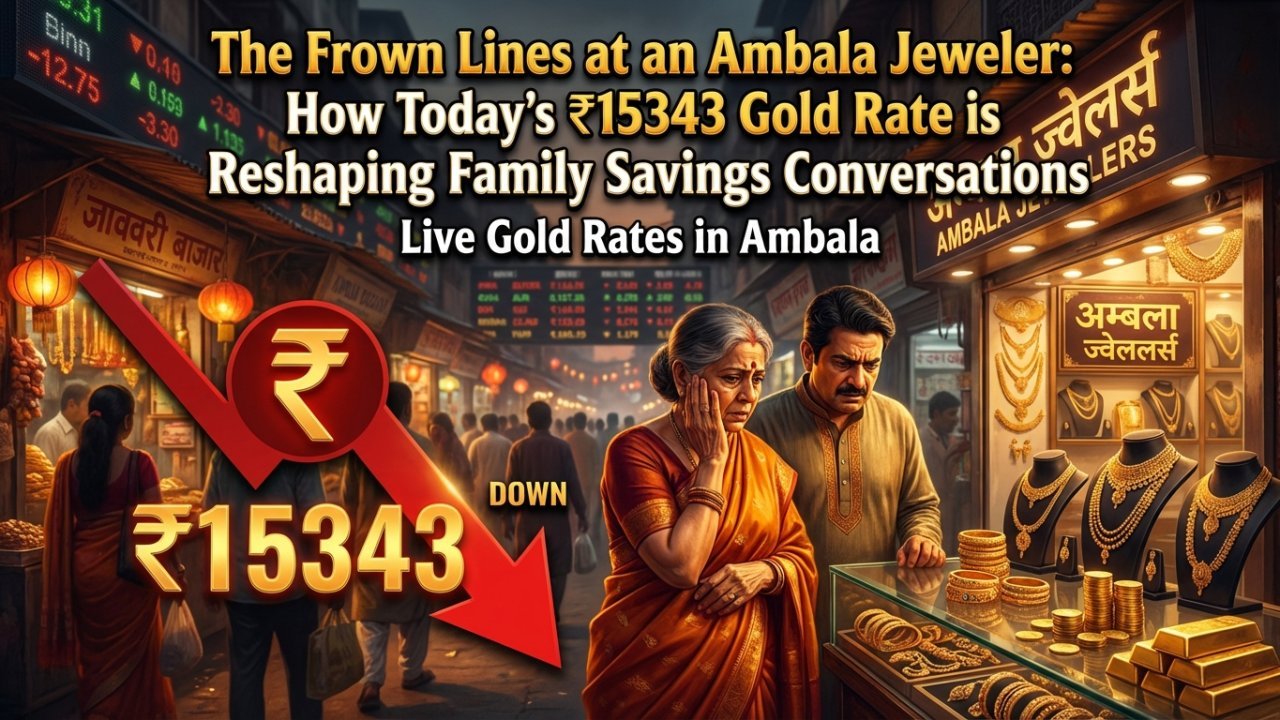
Ambala, often referred to as the "Twin City" of Haryana, holds a unique position in the northern Indian gold market. Known for its scientific instruments and massive cloth market, Ambala is also a bustling hub for jewelry enthusiasts. Whether you are a resident of Ambala Cantt or Ambala City, understanding the nuances of the local gold market is essential for making a sound investment. This comprehensive guide explores everything from daily price fluctuations to the best places for low making charges, ensuring you are well-equipped for your next precious metal purchase.
1. Why is gold price different in Ambala?
If you compare the gold rates in Ambala with cities like Delhi, Mumbai, or even nearby Chandigarh, you will often notice a slight variation. This discrepancy is not random; it is driven by several localized factors. Firstly, transportation and logistics play a role. Gold is physically moved from central hubs or ports to Ambala, and the cost of secure transit is factored into the local bullion price.
Secondly, the Ambala Jewellers Association plays a significant role in determining the daily "opening" rate for the city. While they follow international and national trends, they also consider local demand-supply dynamics. Furthermore, state-level taxes and octroi variations can cause a difference. Even within Haryana, different municipal regions might have slight variations in the overheads that jewellers pass on to the consumers. Lastly, the competitive landscape in Ambala, particularly between the traditional Sarafa Bazaar and modern showrooms, influences the final retail price offered to the customer.
2. Which area or shop is famous for low making charges in Ambala?
For those looking to maximize the value of their investment, minimizing making charges is key. In Ambala, the Sarafa Bazaar in Ambala City is the undisputed destination for competitive pricing. This historical market is home to hundreds of small and medium-sized goldsmiths who have been in the business for generations. Because these shops often operate with lower overhead costs compared to large, air-conditioned brand showrooms, they are able to offer significantly lower making charges.
Traditional family jewellers in the Ambala Cantt area, specifically around the Sadar Bazaar region, are also known for their flexibility. While branded outlets usually have fixed making charges (often starting from 12% to 25%), local artisans in Sarafa Bazaar might offer making charges as low as 8% to 10%, especially on traditional, heavy gold sets. It is always advisable to visit multiple shops in the Sarafa Bazaar area to compare the "per gram" making charge and negotiate, as local jewellers are often open to bargaining during the off-wedding season.
3. Why do gold prices change daily?
The daily fluctuation of gold prices in Ambala is a reflection of a complex global financial ecosystem. The primary driver is the International Bullion Market (specifically the COMEX in the USA and the London Bullion Market). If the global price of gold rises due to economic uncertainty or a weak US Dollar, the impact is felt immediately in Ambala.
Another critical factor is the Currency Exchange Rate. Since India imports the vast majority of its gold, the value of the Indian Rupee (INR) against the US Dollar (USD) is vital. If the Rupee weakens, gold becomes more expensive to import, causing local prices to spike. Additionally, Import Duties and Central Bank Policies (RBI) influence the supply. When the government increases import taxes, the price in Ambala rises. Lastly, local factors like the onset of the wedding season or festivals like Diwali and Akshaya Tritiya create a surge in demand, which can lead to a localized uptick in daily rates.
4. Gold rates in Ambala (22 karat): How do prices change?
In Ambala, 22 karat gold is the most popular choice for jewelry, as 24 karat gold is too soft for intricate designs. 22 karat gold, also known as "916 gold," contains 91.6% pure gold mixed with other metals like copper or zinc for durability. The price of 22K gold in Ambala is typically calculated as a percentage of the 24K (99.9% pure) rate.
The price change for 22K gold follows a mathematical formula: (24K Gold Price x 0.916) + Local Premium. However, the retail price you pay involves more variables. When the international market is volatile, you might see the 22K rate change twice in a single day—once in the morning based on the opening bell and once in the evening if there is a significant global shift. Buyers in Ambala should track the "916" rate specifically, as this forms the base for most bridal jewelry calculations. During periods of high inflation, 22K gold often sees a steady climb as residents look for a "safe haven" for their savings.
5. Gold and hallmarking centres in Ambala.
To ensure the purity of gold, the Bureau of Indian Standards (BIS) has made hallmarking mandatory. In Ambala, buying hallmarked gold is the only way to guarantee you are getting the purity you paid for. A BIS hallmark consists of three marks: the BIS logo, the purity/fineness (e.g., 22K916), and a 6-digit alphanumeric HUID (Hallmark Unique Identification) number.
Ambala has several BIS-recognized Assaying and Hallmarking Centres. These centers serve as third-party auditors for jewellers. Before purchasing, customers in Ambala can ask the jeweller for a magnifying glass to inspect the HUID mark inside the ornament. You can also use the BIS Care App to verify the HUID number, which will show you the name of the jeweller who got the item hallmarked and the date of hallmarking. This transparency has significantly reduced the instances of under-karatage that were common in the local markets decades ago.
6. Top Jewellers in Ambala.
Ambala offers a mix of prestigious national brands and legendary local establishments. If you prefer standardized pricing and modern designs, the National Brands located primarily in Ambala Cantt and the newer commercial zones of Ambala City are excellent choices. These include:
- Tanishq: Known for their high purity standards and contemporary designs.
- PC Jeweller: Popular for wedding collections and a wide range of gold and diamond ornaments.
- Kalyan Jewellers: Offers a massive variety of traditional designs from across India.
For those looking for a more personalized touch and traditional "Ambala-style" craftsmanship, Local Legends include:
- Khurana Jewellers: A well-known name in the city with a reputation for trust.
- Shree Ram Jewellers: Famous for their presence in the local markets and intricate bridal wear.
- Jewellers in Sarafa Bazaar: Numerous multi-generational shops that specialize in heavy handcrafted gold sets.
7. Supply pressures pushing prices up.
The supply of gold in Ambala is largely dependent on national import levels. India is one of the world's largest consumers of gold, but it produces very little. Therefore, any disruption in the Global Supply Chain—such as mining strikes in South Africa or logistical delays in Dubai—can restrict the flow of gold into the Indian market, including Ambala.
In recent years, Geopolitical Tensions have also acted as a supply pressure. When there is conflict in the Middle East or Eastern Europe, investors flock to gold, and central banks begin hoarding reserves. This reduces the "free-floating" gold available for retail consumers, driving prices higher. Locally in Ambala, during the peak "Sahwa" (wedding dates), the sudden spike in demand can sometimes outstrip the immediate stock held by local jewellers, leading to a temporary premium on the gold rate.
8. How to store gold in Ambala?
Once you have purchased gold, security becomes the primary concern. Most residents in Ambala prefer Bank Lockers. Major banks like SBI, PNB, and HDFC in Ambala Cantt and City offer locker facilities. While there is an annual fee, it is the safest method against theft. However, remember that banks are generally not liable for the contents of the locker in case of natural disasters, so some choose to take additional "Locker Insurance."
For those who prefer keeping gold at home, investing in a high-quality fireproof safe is essential. It should be bolted to the floor or wall to prevent easy removal. Another emerging trend in Ambala is Digital Gold or Gold ETFs, which eliminate the need for physical storage entirely. This allows you to own gold on paper or in a digital vault, backed by physical gold stored in secure, insured warehouses by the provider.
9. Gold vs Real Estate in Ambala.
Ambala has seen significant growth in real estate, especially with the development of new sectors and proximity to the highway. However, when compared to gold, both have pros and cons. Gold is highly liquid; you can walk into any shop in Sarafa Bazaar and convert your gold into cash within an hour. Real estate in Ambala, while potentially offering higher long-term capital appreciation, can take months or even years to sell.
The entry barrier for gold is very low—you can buy as little as 1 gram. Real estate requires a massive upfront investment. However, real estate can provide monthly rental income, which gold does not. Most traditional families in Ambala maintain a balanced portfolio, using gold as an "emergency fund" and real estate as a "wealth creator." In times of economic recession, gold prices in Ambala have historically remained more resilient than property prices.
10. What is a Sovereign Gold Bond?
For investors in Ambala who do not need physical gold for jewelry, Sovereign Gold Bonds (SGBs) are a superior alternative. Issued by the Reserve Bank of India, SGBs are government securities denominated in grams of gold. They are a safe way to invest because there is no risk of theft or purity issues.
The biggest advantages of SGBs for Ambala residents are:
- Interest Income: You earn a fixed interest rate (usually around 2.5% per annum) on the initial investment amount.
- Tax Benefits: If held until maturity (8 years), the capital gains tax is exempted.
- No Making Charges: You pay only for the pure gold price, saving 10-20% compared to physical jewelry.
SGBs can be purchased through local banks in Ambala, designated post offices, or via online trading accounts.
11. Taxation of gold in Ambala.
Understanding the tax implications is crucial for any gold buyer in Ambala. When you purchase physical gold, you must pay a GST of 3% on the value of the gold plus the making charges. Additionally, there is a 5% GST on the making charges themselves (labor component).
If you sell your gold, Capital Gains Tax applies. If you sell the gold within three years of purchase, it is considered a Short-Term Capital Gain (STCG) and added to your annual income, taxed as per your income tax slab. If you sell after three years, it is a Long-Term Capital Gain (LTCG), which is typically taxed at 20% with indexation benefits (though tax laws are subject to change in annual budgets). It is vital to keep all your purchase invoices (Bukka bills) from your Ambala jeweller to prove the cost of acquisition and reduce your tax liability when selling.
The Ambala Edge: How Local Rates Stack Up Against National Metros
While gold is a global commodity, its price in Ambala is shaped by a unique blend of regional logistics and North Indian market dynamics. Typically, Ambala’s gold rates track very closely with New Delhi, often trading within a narrow margin of the national capital due to the seamless supply chain between the two hubs. For local investors, this means Ambala often serves as a more accessible alternative to the high-pressure markets of Delhi, offering similar transparency but frequently with more competitive making charges in the historic Sarafa Bazaar area.
When compared to coastal cities like Mumbai or Chennai, Ambala may occasionally reflect a slight logistical premium. Because southern cities are closer to major import ports, they sometimes enjoy a marginal price advantage on the base bullion. However, Haryana’s specific tax structures and the high-volume turnover in Ambala’s jewelry sector often neutralize this gap. Interestingly, during the peak 'Vyah' (wedding) season in the North, Ambala can see localized demand spikes that cause its rates to temporarily diverge from the South, reflecting the intense cultural value placed on gold in the region.
For those looking to buy, it is vital to monitor the 'Tri-city' influence. Trends in Chandigarh and Mohali often ripple into the Ambala market within hours. Savvy buyers should note that while the 24K benchmark remains relatively uniform across major Indian cities, the 22K jewelry rates in Ambala are where the real value is found, as local artisans often provide craftsmanship at rates that are significantly lower than those found in premium showrooms in Mumbai or Bangalore.
Key Takeaway: Ambala gold prices closely mirror Delhi’s market trends, offering a strategic buying point for North Indians who want metro-equivalent rates without the logistical hurdles of a Tier-1 city.
Ambala Gold Market: Navigating Global Volatility in the Local Sarafa Bazar
As global markets grapple with shifting US Federal Reserve policies and escalating geopolitical uncertainties, the ripple effects are being felt acutely across the jewelry hubs of Ambala. The local gold rate in Ambala's historic Sarafa Bazar is no longer just a reflection of domestic demand; it has become increasingly sensitive to the strengthening US Dollar and international bullion spot prices. Recent fluctuations have seen savvy investors in the "Twin City" closely monitoring the 24K and 22K benchmarks, as even a minor pivot in global inflation data can lead to a significant price swing at the local level within a matter of hours.
What makes Ambala’s market uniquely resilient is its strategic blend of urban investment and robust demand from the surrounding agricultural belt of Haryana. While international factors dictate the base price, the local market dynamics often adjust based on the seasonal wedding rush and harvest cycles. Currently, despite global price hikes, the sentiment in Ambala remains cautiously bullish. Local bullion experts note that while volatility might deter casual buyers, serious investors are utilizing these price corrections to diversify their portfolios, viewing gold as the ultimate hedge against currency depreciation and a preferred asset for long-term wealth preservation.
Key Takeaway: For Ambala residents, the current market climate suggests that "buying on the dips" during global corrections remains the most effective strategy. Always verify the purity standards and compare the daily opening rates in the Sarafa Bazar against international trends before finalizing high-value transactions.
Expert Tip: Securing Your Assets in Ambala’s Fluctuating Gold Market
As gold prices in Ambala reach historic peaks, the local Sarafa Bazaar is witnessing a shift in consumer behavior: the focus has moved from mere accumulation to sophisticated asset protection. For households in Ambala Cantt and the City, where gold is often a multi-generational heirloom, the financial risk of theft or accidental loss has scaled alongside the market value. Relying solely on traditional home security is increasingly viewed as insufficient by local financial advisors. Specialized jewellery insurance is no longer a luxury but a strategic necessity to hedge against the rising cost of replacement in today’s bullish market.
When exploring insurance options in Ambala, residents should distinguish between a standard 'Home Contents' policy and a dedicated 'All-Risk' jewellery cover. While a general home policy may include gold, it often imposes restrictive sub-limits that fail to cover the full market value of high-carat ornaments. Experts recommend seeking policies that offer 'agreed value' coverage based on a recent valuation certificate from a certified Ambala-based jeweller. This ensures that if a claim is made during a price surge, you are reimbursed at the current market rate rather than a depreciated historical cost. Additionally, ensure your policy covers 'transit risks,' which is vital for those transporting jewellery to the many high-profile wedding venues across the Ambala-Chandigarh highway.
Furthermore, it is a common misconception that bank lockers provide absolute indemnity. Under current RBI guidelines, a bank’s liability is limited to 100 times the annual rent of the locker, which is often a fraction of the gold's actual value. To bridge this gap, Ambala’s investors are increasingly opting for 'Locker Insurance' add-ons. These policies provide comprehensive protection against fire, earthquake, and burglary while the gold is stored in a bank vault, offering peace of mind that a standard bank agreement cannot guarantee.
Key Takeaway: Protect your investment against both physical loss and market volatility by opting for an 'All-Risk' insurance policy backed by a 2024 valuation certificate from a reputable Ambala jeweller.
Digital Gold: A Modern Hedge for Ambala’s Smart Investors
As Ambala continues to evolve from a historic commercial hub into a modern trading center, many local families are shifting their focus from traditional jewelry lockers to digital gold. For residents navigating the fluctuations of the local bullion market, digital gold offers a seamless way to bypass the logistical hurdles of physical storage and the security concerns associated with keeping high-value assets at home. By purchasing gold through regulated platforms, Ambala investors can accumulate wealth in micro-fractions, starting with as little as ₹100, which aligns perfectly with the city’s disciplined savings culture.
Safety remains the primary question for those accustomed to the tactile assurance of 22-karat gold coins and ornaments bought from local jewelers. However, digital gold is backed by physical reserves stored in insured, vaulted facilities. The key for Ambala residents is to utilize reputable platforms that provide transparency regarding the underlying gold purity and insurance coverage. While physical gold will always hold its cultural significance for weddings and festivals in the Ambala Cantonment and City areas, digital gold serves as a superior tool for wealth preservation and liquid investment, allowing you to track real-time global price movements without the "making charges" or purity premiums associated with physical jewelry.
Key Takeaway: Digital gold is a highly secure, cost-effective alternative for Ambala investors looking to diversify their portfolios; prioritize platforms that offer instant redemption for physical bullion to ensure you retain full control over your assets.
Maximizing Value: The Rise of Professional Gold Refining in Ambala
As gold prices continue to fluctuate in the Ambala bullion market, many residents are moving beyond traditional pawn shops and looking toward professional recycling and refining services. With the city serving as a major commercial hub in Haryana, the local demand for transparent, technology-driven gold evaluation has surged. Whether you are looking to liquidate ancestral jewelry or clear out broken gold assets, the shift toward standardized refining ensures that you receive payment based on the current market spot price rather than arbitrary, subjective appraisals.
When choosing a service provider in the Ambala area, prioritize establishments that utilize non-destructive X-ray fluorescence (XRF) technology. This precision testing allows for an accurate assessment of gold purity without the need for traditional acid tests that can damage your valuables. Furthermore, reputable refiners in the region are now providing real-time pricing transparency, allowing sellers to track the exact carat weight and purity percentage of their scrap gold against the day’s live market rates. This professional approach not only safeguards your investment but also eliminates the "middleman" margins often associated with informal jewelry trade-ins.
Before heading to a refiner, it is essential to have a clear understanding of your gold’s weight and current market purity. By separating your items by karat—typically 18k, 22k, or 24k—you can better negotiate your payout. In a city as commercially active as Ambala, competition among refiners is high; don’t hesitate to compare the refining charges and service fees across multiple certified outlets to ensure you are capturing the maximum value for your assets.
Key Takeaway: To get the best return on your recycled gold in Ambala, always insist on XRF-based purity testing and verify that your payout is calculated against the day's live market spot price, rather than relying on traditional, non-transparent appraisal methods.
Ambala Gold Watch: Festival Season Buying Tips
As Ambala's vibrant markets begin to hum with the prelude to the much-anticipated festival and wedding season, gold remains at the heart of celebrations and investments. Globally, gold prices are navigating a complex landscape of interest rate expectations and geopolitical shifts, but locally in Ambala, the festive spirit often adds its own unique dynamic. With Dhanteras, Diwali, and the peak wedding season just around the corner, demand for the yellow metal is poised to surge, traditionally creating upward pressure on prices.
For buyers in Ambala, this period presents both opportunity and the need for strategic planning. While the sentimental value of gold during festivals is immeasurable, smart purchasing can yield long-term benefits. Keep a close eye on daily price movements and consider staggered buying if your budget allows, rather than a single large purchase. Many trusted local jewellers in Ambala offer attractive making charge discounts or special schemes closer to the festive dates, so it's wise to inquire and compare. Always prioritize BIS Hallmark certified gold for guaranteed purity, whether you're buying intricate jewellery or investment-grade bars and coins.
Understanding Ambala's local market sentiment is key. The agricultural prosperity in the region, combined with the general economic climate, significantly influences local gold demand. While global trends set the baseline, increased local buying power during festivals can sometimes create a slight premium. Staying informed and consulting with your preferred Ambala jeweller can help you navigate these nuances, ensuring your festive gold purchase is both auspicious and economically sound.
Key Takeaway: For Ambala's festive gold buyers, timely research, purity checks, and leveraging local jeweller schemes are crucial for making a smart and valuable purchase.
Beyond Gold: Silver’s Rising Profile in Ambala’s Investment Landscape
As Ambala’s investors increasingly seek to diversify their portfolios beyond traditional gold holdings, silver is rapidly emerging as a compelling alternative. While gold remains the cultural bedrock for weddings and festive gifting across the Ambala Cantonment and city markets, the industrial and speculative appeal of silver has seen a marked uptick. Local jewelers and bullion traders report that younger, tech-savvy investors are viewing silver not just as an ornamental metal, but as a strategic asset, particularly as global demand for silver in photovoltaics and electric vehicle production continues to climb.
For many in Ambala, the lower entry price point of silver compared to gold makes it an attractive vehicle for systematic investment. Whether through physical bars or silver coins frequently traded in the busy markets near Nicholson Road, residents are finding that silver offers a unique hedge during periods of gold price volatility. Furthermore, as the local economy integrates more closely with broader industrial supply chains, the dual-nature of silver—acting as both a precious metal and an industrial commodity—provides a distinct advantage that gold alone cannot offer.
However, investors should remain mindful of silver’s inherent price volatility, which typically exceeds that of gold. Before pivoting, it is essential to monitor the gold-silver ratio, a key metric used by seasoned traders to determine whether silver is undervalued relative to its yellow counterpart. By balancing a core gold holding with a tactical allocation of silver, Ambala investors can build a more resilient hedge against inflationary pressures while capitalizing on the metal's industrial growth trajectory.
Key Takeaway: While gold remains the emotional and financial anchor for Ambala households, incorporating silver as a tactical, lower-entry-cost asset can provide both diversification and potential growth driven by global industrial demand.
Beyond Gold: The Emerging Appeal of Silver in Ambala’s Investment Landscape
While gold has traditionally dominated household savings across Ambala, a noticeable shift is underway among local investors. As the price of gold hits historic highs, savvy residents in districts from Ambala City to the Cantt area are increasingly looking toward silver as a high-potential alternative. Often referred to as "poor man’s gold," silver is currently being repositioned as a strategic industrial metal, driven by a surge in demand from the green energy and electronics sectors, which provides a unique layer of price support beyond traditional jewelry consumption.
For the Ambala investor, silver offers a lower entry point, allowing for greater accumulation of physical assets without the significant capital outlay required for gold. Local jewelers are observing a rise in interest toward silver bars and coins, particularly as a hedge against inflation. While silver is historically more volatile than gold, this price fluctuation provides opportunistic entry points for those looking to diversify their portfolios. When market conditions tighten, the industrial demand for silver often acts as a stabilizer, making it a compelling, liquid asset for those navigating the current economic climate in Haryana.
Key Takeaway: Silver is evolving from a traditional gifting metal into a viable investment vehicle in Ambala; investors should consider allocating a portion of their precious metal portfolio to silver to balance the high-cost barrier of gold while capturing growth from its rising industrial utility.
Ambala Wedding Season: Strategic Gold Buying Insights
As the wedding season approaches, Ambala’s bustling gold markets—from the traditional hubs near Nicholson Road to the upscale jewelry showrooms—are witnessing a palpable shift in consumer behavior. Historically, the wedding season in Haryana drives a significant surge in demand for 22-karat gold ornaments, particularly intricate bridal sets and heirloom-quality pieces. However, local market analysts observe that buyers this year are increasingly balancing emotional sentiment with price-conscious strategies, opting for lightweight, contemporary designs that maximize aesthetic appeal while minimizing the immediate financial burden of rising gold prices.
For those planning purchases in Ambala, the current market trend suggests that timing is critical. With global economic fluctuations impacting bullion rates, local jewelers are reporting a preference for "staggered buying"—where families purchase smaller gold coins or bars well before the auspicious wedding dates to hedge against potential price spikes. Furthermore, given Ambala's role as a major trading center for the region, competition among local retailers remains fierce. Savvy shoppers are advised to prioritize hallmark-certified jewelry (BIS 916) and scrutinize the "making charges," which often fluctuate based on the intricacy of the design during peak seasonal demand.
Key Takeaway: To optimize your wedding budget, consider purchasing gold bullion or coins during minor price dips in the pre-wedding window, and negotiate making charges on bridal jewelry early to avoid the premium pricing often seen during the height of the marriage season.
Leveraging Gold Loans in Ambala: A Strategic Financial Move
For residents of Ambala, gold is far more than a cultural asset; it is a vital financial buffer. As the city’s commercial landscape evolves—from the bustling wholesale markets of Ambala City to the thriving industrial hubs near the Cantt area—gold loans have emerged as a preferred instrument for immediate liquidity. Whether you are a small business owner looking to restock inventory or an individual managing urgent personal expenses, the high liquidity of gold allows for quick, collateral-based funding without the tedious documentation required for traditional unsecured loans.
Currently, the lending environment in Ambala is highly competitive. Major nationalized banks, private lenders, and specialized gold finance companies have a significant footprint across the city, offering flexible LTV (Loan-to-Value) ratios that align with the latest RBI guidelines. Before opting for a loan, it is essential to compare the "price per gram" offered by local lenders against the daily market fluctuations in Ambala. Many local players now offer doorstep valuation services, which adds a layer of convenience for those residing in the outskirts of the district, ensuring your gold remains secure while you access the capital you need.
When evaluating your options, prioritize lenders who offer transparent processing fees and flexible repayment tenures, such as bullet repayment schemes. Given the steady demand for gold in the Haryana region, keeping a close watch on the local spot price remains the best strategy to maximize your loan amount. By treating your gold holdings as a dynamic financial tool rather than a static asset, you can effectively bridge short-term cash flow gaps while retaining ownership of your precious metal.
Key Takeaway: Before pledging your gold in Ambala, always compare the interest rates and LTV ratios across at least three local lenders; opting for a lender with a strong physical presence in your vicinity ensures better security and faster, hassle-free processing.
Digital Gold: A Modern Hedge for Ambala’s Investors
As gold prices continue to fluctuate in the bustling markets of Ambala, from the traditional jewelry hubs of Nicholson Road to the growing investment circles in Ambala Cantt, a digital transformation is underway. Many residents are shifting their focus from physical bullion—which necessitates worrying about bank locker security and storage costs—to the seamless world of Digital Gold. For the modern Ambala investor, Digital Gold offers a sophisticated alternative: you can buy and sell 24K gold in fractions as small as one rupee, making it an accessible entry point for those wary of the high premiums and making charges associated with physical ornaments.
But is it safe? For residents of Ambala, the answer lies in the platform’s transparency. Reputable Digital Gold providers in India back every unit of digital investment with physical gold stored in insured, government-audited vaults. Unlike local jewelry shops where purity verification can be subjective, Digital Gold is strictly hallmarked and backed by institutional security. However, investors must exercise due diligence by choosing platforms that offer a clear "sell-back" guarantee and provide certificates of ownership. For those looking to hedge against inflation without the logistical headaches of physical storage, Digital Gold is increasingly becoming the preferred method for building a long-term wealth portfolio in the heart of Haryana.
Key Takeaway: Digital Gold is a highly secure and cost-effective alternative for Ambala residents, provided you transact through RBI-regulated or government-backed platforms that ensure 100% physical backing and transparent redemption options.
GST on Gold: What Every Buyer in Ambala Needs to Know
For gold buyers navigating the bustling jewelry markets of Ambala—from the heritage shops in Ambala Cantt to the modern showrooms in Ambala City—understanding the Goods and Services Tax (GST) structure is essential for budget planning. In India, gold purchases attract a flat 3% GST on the value of the metal. However, a frequently overlooked detail for local consumers is that this tax also applies to the making charges (labor costs) associated with crafting intricate ornaments. When you finalize a purchase at a local jeweler, this 3% levy is applied to the final invoice, encompassing both the precious metal and the craftsmanship fee.
It is important to remember that this tax is non-negotiable and mandated by the central government, meaning it remains uniform across all reputable jewelers in Haryana. To avoid confusion during your visit, always request a transparent, computer-generated bill that clearly segregates the gold price, the making charges, and the GST component. If you are opting for exchange schemes, be aware that GST is applicable on the new jewelry value, not just the difference amount. Keeping these technicalities in mind ensures that you aren't caught off guard by the final price tag when purchasing festive jewelry or investment coins in our local market.
Key Takeaway: Always verify that your jeweler provides a detailed GST-compliant invoice that explicitly breaks down the 3% tax on both the gold weight and the making charges to ensure you are paying the correct government-mandated price.
Beyond the Vault: Why Ambala Investors are Shifting to Sovereign Gold Bonds
For generations, families in Ambala—from the bustling markets of Sadar Bazaar to the residential hubs of Model Town—have viewed physical gold as the ultimate store of value. However, as local gold prices fluctuate in response to global market volatility, a growing number of savvy investors are pivoting toward Sovereign Gold Bonds (SGBs). Unlike physical ornaments or bars, which carry the dual burden of making charges and persistent security concerns, SGBs offer a sophisticated, digital-first alternative that aligns with the modern financial landscape.
The primary advantage for Ambala residents lies in the dual-benefit structure of these government-backed securities. Not only do you gain exposure to the 24-karat gold price without the risk of theft or the need for a bank locker, but you also earn a consistent interest rate of 2.50% per annum, paid semi-annually. Furthermore, the tax efficiency is a major draw; capital gains arising on redemption of SGBs by an individual are completely tax-exempt if held until maturity. By choosing SGBs, you are effectively turning a passive asset—which usually sits idle in a safe—into an income-generating investment that tracks the purity of gold perfectly.
As the gold market in Ambala becomes increasingly integrated with digital trading platforms, SGBs represent a strategic move to hedge against inflation while ensuring your portfolio remains liquid and secure. Moving away from the physical premium paid at local jewelers allows your capital to work harder, ensuring that your investment reflects the true market rate of gold without any hidden deductions.
Key Takeaway: Sovereign Gold Bonds eliminate the making charges and storage risks associated with physical gold while providing a guaranteed 2.5% annual interest, making them a superior, tax-efficient choice for long-term wealth preservation in Ambala.