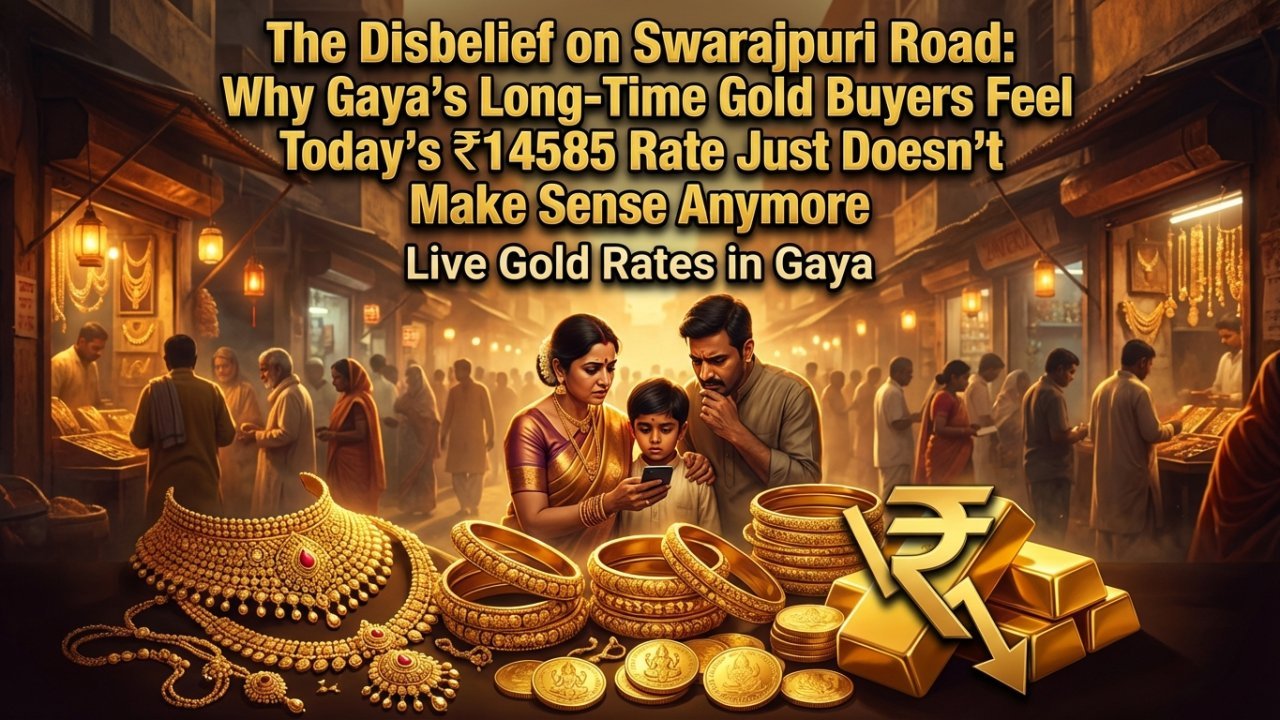
1. Why is gold price different in Gaya?
If you have ever compared the gold rates in Gaya with those in Mumbai, Delhi, or even nearby Patna, you might have noticed a slight variation. This discrepancy is not accidental but is driven by several localized and logistical factors. Firstly, the transportation cost plays a significant role. Since gold is physically moved under high security, the distance from major ports or distribution hubs to Gaya adds to the final landed cost of the metal.
Secondly, the local bullion associations in Bihar, specifically the Gaya Swarnkar Sangh, play a pivotal role in determining the daily "opening" rate based on the previous day's closing and the current international trends. Additionally, local taxes and octroi (where applicable) can vary between states and even municipalities. In Gaya, the volume of trade compared to a metro city like Mumbai is lower, meaning retailers may have slightly higher margins to cover their operational overheads, leading to a marginal difference in the retail price of gold.
2. Which area or shop is famous for low making charges in Gaya?
For savvy shoppers in Gaya, the GB Road (Gautam Buddha Road) area is the undisputed hub for gold and silver jewelry. This bustling commercial stretch houses both century-old traditional family jewellers and modern branded showrooms. If you are looking for low making charges, the traditional shops in the Andar Gaya (Old Gaya) market and the narrow lanes of Tower Chowk are highly recommended.
Local artisans in these areas often work on a smaller margin compared to national chains. While big brands might charge anywhere from 12% to 25% as making charges, the local family-owned shops in the older parts of the city often offer competitive rates starting from 8% to 10%, especially on plain gold ornaments. During the wedding season or festivals like Dhanteras, many shops along GB Road offer flat discounts on making charges to attract the local crowd, making it the best time to negotiate and purchase.
3. Why do gold prices change daily?
The daily fluctuation of gold prices in Gaya is a reflection of a complex global and national economic web. The most significant driver is the International Market Trend. Since India imports the majority of its gold, the prices are pegged to the London Bullion Market Association (LBMA) and the COMEX rates. If the US Dollar strengthens against the Indian Rupee, gold becomes more expensive for Indian importers, leading to a price hike in Gaya.
Furthermore, Central Bank reserves influence prices; when the Reserve Bank of India (RBI) or other global central banks increase their gold holdings, prices tend to rise. Locally, the demand-supply gap during the Lagun (wedding season) in Bihar causes a temporary spike. On a national level, changes in import duties announced in the Union Budget can cause an overnight shift in prices. Investors in Gaya must keep an eye on global geopolitical tensions, as gold is considered a "safe haven" asset—whenever there is global instability, gold prices usually climb.
4. Gold rates in Gaya (22 karat): How do prices change?
In Gaya, 22 karat gold is the most popular choice for jewelry because it offers the perfect balance between purity and durability. 22K gold consists of 91.6% pure gold mixed with other metals like copper or zinc to provide strength. The price of 22K gold is always lower than 24K (pure gold) and is calculated based on the purity percentage.
Prices for 22K gold change based on the daily "spot price" released by the bullion associations. In Gaya, retailers usually follow the "Standard Gold" (24K) and "Ornament Gold" (22K) classification. When the international market is volatile, you might see the price change twice in a single day—once in the morning and once in the evening. Buyers should note that while the base price is fixed, the final billing price includes the base rate, making charges, and a mandatory 3% GST, which collectively determines the total outflow from the consumer's pocket.
5. Gold and hallmarking centres in Gaya.
With the Government of India making BIS Hallmarking mandatory, Gaya has seen a significant shift towards transparency. Hallmarking ensures that the purity of the gold you buy matches what the jeweler claims. A hallmarked piece of jewelry in Gaya will carry the BIS logo, a purity mark (e.g., 22K916), and a unique HUID (Hallmark Unique Identification) number.
There are several authorized Assaying and Hallmarking Centres (AHCs) in and around Gaya that serve the local jewelry community. These centers use X-ray Fluorescence (XRF) machines to verify the gold content. When purchasing gold in Gaya, always insist on a digital HUID receipt. This not only guarantees the quality but also ensures a better resale value if you decide to sell or exchange your gold at a later date, as any certified jeweler in India will accept BIS-hallmarked gold without questioning its purity.
6. Top Jewellers in Gaya.
Gaya offers a diverse mix of jewelry shopping experiences ranging from heritage stores to contemporary boutiques. Some of the top names include:
- Tanishq (Titan Company): Located prominently on GB Road, it is the go-to for those seeking guaranteed purity and modern designs with a transparent pricing structure.
- PC Chandra Jewellers: Known for their intricate Bengali craftsmanship, they are highly favored by the local population for wedding jewelry.
- Kalyan Jewellers: A national giant that offers a wide range of designs and competitive loyalty programs.
- Local Heritage Shops: Names like Swarn Shilp and other legacy stores near Tower Chowk have served generations of Gaya residents, offering personalized service and traditional Bihari designs like Dholna and Chik sets.
These jewellers are known for their reliability, variety, and adherence to the latest hallmarking standards mandated by the government.
7. Supply pressures pushing prices up.
Gold prices in Gaya are often pushed upward by supply-side constraints. Since India does not produce a significant amount of gold domestically, we are at the mercy of international supply chains. Any disruption in mining activities in South Africa or Australia, or changes in export policies of major refining hubs like Switzerland and the UAE, directly affects the availability of gold in India.
In the context of Gaya, logistical bottlenecks can also create temporary supply pressures. During peak festival seasons, the demand for physical gold often outstrips the local supply held by wholesalers. This leads to a "premium" being charged over the standard market rate. Additionally, when the government tightens gold import quotas to manage the Current Account Deficit (CAD), the scarcity of gold in the domestic market inevitably leads to higher retail prices for the end consumer in Gaya.
8. How to store gold in Gaya?
Securing your gold investment is as important as buying it. In Gaya, residents typically use three methods for storage:
- Bank Lockers: Leading banks like State Bank of India (SBI), Punjab National Bank (PNB), and ICICI Bank in Gaya offer locker facilities. This is the safest method, although it involves an annual rental fee and requires a savings account with the bank.
- Home Safes: Many traditional households prefer keeping gold in heavy-duty, fire-resistant digital safes. While convenient, this poses a higher security risk and often requires additional home insurance.
- Digital Gold/SGBs: For those who buy gold as an investment rather than for wearing, "storing" gold digitally or in paper form is the modern solution. This eliminates the risk of theft and the cost of storage.
If you choose to store physical gold at home, it is advisable to keep original invoices and hallmarking certificates in a separate, digital location to facilitate insurance claims or resale.
9. Gold vs Real Estate in Gaya.
Choosing between gold and real estate is a common dilemma for investors in Gaya. Gold offers high liquidity; you can walk into any shop on GB Road and convert your gold into cash within an hour. It is also an excellent hedge against inflation. For small-scale investors, gold is more accessible as you can start investing with as little as one gram.
On the other hand, Real Estate in Gaya, especially in developing areas like Bodh Gaya Road or near the Gaya Airport, has shown significant capital appreciation over the last decade. However, real estate requires a large ticket size, involves complex legal paperwork, and can take months to liquidate. While real estate provides "rental income," gold provides "peace of mind" during economic downturns. Most financial experts in Gaya suggest a balanced portfolio, where 10-15% of assets are in gold to provide liquidity, while the rest can be in property for long-term wealth creation.
10. What is a Sovereign Gold Bond?
For the residents of Gaya who are looking for a smart way to invest in gold without the worries of storage or making charges, the Sovereign Gold Bond (SGB) is an excellent choice. Issued by the Reserve Bank of India on behalf of the Government, SGBs are substitutes for physical gold.
The key benefits of SGBs include a fixed interest rate of 2.5% per annum (paid semi-annually) on the initial investment amount. Moreover, there are no making charges or GST involved. One of the biggest advantages for Gaya investors is the tax exemption on capital gains if the bond is held until maturity (8 years). You can purchase these bonds through local banks, designated post offices, or online trading platforms. SGBs are also "collateral-ready," meaning you can take a loan against them just like physical gold.
11. Taxation of gold in Gaya.
Understanding the tax implications is crucial for any gold buyer in Gaya. When you buy gold, you are required to pay a 3% Goods and Services Tax (GST) on the value of the gold plus the making charges. If you are exchanging old gold for new jewelry, GST is usually charged only on the value of the additional gold added and the making charges of the new piece.
When it comes to selling gold, Capital Gains Tax applies. If you sell your gold within three years of purchase, it is considered a Short-Term Capital Gain (STCG) and is added to your annual income, taxed at your applicable slab rate. If you sell after three years, it is treated as a Long-Term Capital Gain (LTCG), taxed at 20% with indexation benefits. It is important to maintain all purchase bills in Gaya to accurately calculate these taxes and avoid any legal complications with the Income Tax department.
Expert Tip: Why Gaya’s Smart Investors are Shifting from Physical Gold to SGBs
In the bustling markets of Gaya, from the historic lanes of GB Road to the jewelry hubs near the Vishnupad Temple, gold has always been more than just a metal—it is a symbol of security and tradition. However, as global market volatility impacts local rates, savvy residents are increasingly looking beyond physical coins and biscuits. Sovereign Gold Bonds (SGBs) are emerging as a superior alternative for those in Gaya who prioritize investment growth over ornamental use. Unlike physical gold, which incurs a 3% GST and significant making charges at local showrooms, SGBs allow you to own gold in a digital format, backed by the Government of India, with none of the "wastage" costs that typically eat into your margins.
The real advantage for Gaya’s long-term investors lies in the dual-earning potential of SGBs. While physical gold sits idle in a bank locker—often incurring annual maintenance fees—SGBs pay a fixed interest of 2.5% per annum on the initial investment. Furthermore, for those planning for future family milestones or weddings, SGBs offer a significant tax shield; the capital gains are entirely tax-exempt if held until maturity. This makes them an ideal "set-and-forget" asset, eliminating the security risks associated with keeping high-value physical assets at home or the hassle of verifying purity at local refineries.
Key Takeaway: For Gaya residents looking to hedge against inflation, Sovereign Gold Bonds offer a tax-efficient, interest-bearing alternative that eliminates the storage risks and making charges associated with traditional gold investments.
Timing Your Gold Purchase in Gaya: Finding the Daily Sweet Spot
For residents of Gaya, timing a gold purchase involves balancing international market trends with the local rhythm of the city’s bullion trade. While global gold prices fluctuate 24/7, the local rates in Gaya’s prominent jewelry hubs—such as GB Road and the markets near Tower Chowk—typically stabilize by 11:30 AM. This is when local jewelers receive the morning’s opening rates, which incorporate the previous night’s closing figures from the Multi Commodity Exchange (MCX). For those looking for price certainty, the window between 12:00 PM and 2:00 PM is often considered the most stable time to transact before the afternoon volatility kicks in.
However, savvy investors in Gaya should also keep a close eye on the evening hours. As the US markets open (around 6:30 PM to 7:00 PM IST), gold prices often experience a second wave of movement. If global trends are downward, visiting your local jeweler in the late evening can sometimes result in a better bargain, provided the retailer is willing to adjust for the real-time dip. During high-demand periods like the wedding season or the days surrounding the Pitru Paksha Mela, when footfall is high, arriving early in the day is recommended to ensure personalized service and a wider selection of Hallmarked jewelry before the crowds peak.
Furthermore, Gaya’s market often sees a slight premium during local festivals compared to larger metros like Patna. To get the best value, it is advisable to monitor the MCX live feed an hour before heading out. If the MCX shows a sharp decline, it provides you with leverage to negotiate the "making charges," even if the base gold rate remains momentarily fixed by the local association. In a city where gold is both a sacred tradition and a financial safety net, these small timing adjustments can lead to significant savings on high-grammage purchases.
Key Takeaway: Aim to shop between 12:00 PM and 2:00 PM for price stability, but monitor the MCX live feed after 7:00 PM for potential evening price drops that could favor the buyer.
Expert Tip: Navigating Gold Loan Opportunities in Gaya
As gold prices in Gaya continue to reflect global market volatility, many local residents and business owners are turning to gold loans as a strategic tool for immediate liquidity. In a city where gold is not just an ornament but a traditional form of security, the local financial landscape—stretching from the busy commercial hubs of GB Road to the administrative centers near the Collectorate—is seeing a surge in competitive gold-backed financing. Major nationalized banks and specialized NBFCs like Muthoot Finance and Manappuram, which have a strong presence across Gaya, are currently offering attractive interest rates that often undercut traditional personal loans, making it an ideal time for those needing quick capital for business expansion or agricultural needs.
For borrowers in Gaya, the key to a successful gold loan lies in understanding the Loan-to-Value (LTV) ratio. While the Reserve Bank of India sets the upper limit, local competition among lenders in the Magadh region often leads to variations in how gold is appraised and the speed at which funds are disbursed. Expert advice suggests visiting multiple branches in the city to compare not just the interest rates, but also the "per gram" value being offered. Given Gaya’s status as a major trading hub for Southern Bihar, several local lenders now offer flexible "bullet repayment" schemes, allowing borrowers to pay the principal and interest at the end of the term, which is particularly beneficial for the city’s seasonal traders and small-scale entrepreneurs.
Key Takeaway: To maximize the value of your assets in Gaya, prioritize lenders that offer transparent gold appraisal processes and high LTV ratios; always compare the processing fees between nationalized banks and private firms to ensure you are getting the most cost-effective liquidity.
Why Gaya Investors Are Shifting from Physical Gold to Sovereign Gold Bonds (SGBs)
For generations, the residents of Gaya have viewed physical gold—whether in the form of heirloom jewelry or bullion—as the ultimate store of value. However, as local market dynamics evolve, an increasing number of investors in the city are diversifying their portfolios by opting for Sovereign Gold Bonds (SGBs). Unlike physical gold, which brings the perennial concerns of safety, high storage costs, and the inevitable making charges that erode value, SGBs offer a sophisticated, paper-based alternative backed by the Government of India.
The primary advantage for a Gaya-based investor lies in the dual benefit of capital appreciation and a guaranteed annual interest rate of 2.5%. While the local price of gold in Gaya's markets may fluctuate based on global trends and import duties, SGBs eliminate the "making charge" premium, ensuring that 100% of your capital is invested in the metal's purity. Furthermore, since SGBs are held in digital or demat form, they remove the risks of theft or loss often associated with keeping physical assets at home. For those planning long-term wealth creation, the tax exemption on capital gains if held until maturity provides a significant fiscal edge over physical gold, which often incurs hidden transaction costs during resale at local shops.
Key Takeaway: By transitioning to SGBs, Gaya investors can bypass the storage risks and high making charges of physical jewelry while earning a steady 2.5% annual interest, making it a smarter, government-backed choice for modern wealth preservation.
Beyond Gold: The Growing Allure of Silver in Gaya’s Investment Landscape
While gold has traditionally dominated the investment portfolios of households in Gaya, local market trends are signaling a notable shift toward silver. As the price of gold reaches new historical highs, many retail investors in the city are diversifying their holdings by turning to silver—not just for traditional jewelry or festive silverware, but as a strategic industrial metal play. In Gaya’s bustling local markets, from the gold-centric corridors of G.B. Road to the suburban jewelers, there is a visible uptick in demand for silver coins and bullion bars, driven by investors seeking a more accessible entry point into the precious metals market.
This pivot is largely fueled by silver’s dual identity as a store of value and a critical industrial commodity. As global demand for green energy technology and electronics accelerates, silver’s industrial utility provides a potential growth cushion that gold—largely a pure hedge—does not offer. For investors in Gaya, this creates a compelling opportunity to leverage lower price volatility for smaller-scale investments, allowing families to build wealth incrementally. Local bullion dealers report that younger, tech-savvy investors in the city are increasingly viewing silver as a 'high-beta' alternative, often purchasing it alongside gold to balance their risk-to-reward ratios.
However, investors should remain mindful of the liquidity differences between the two metals. While gold is easily liquidated at any local jeweler in Gaya, silver’s price is often more sensitive to global industrial supply chains. Navigating this market requires a balanced approach: viewing silver as a long-term growth asset rather than a quick-flip commodity. As the city’s financial literacy grows, silver is firmly establishing itself as a sophisticated pillar of a modern, diversified Gaya investment strategy.
Key Takeaway: With gold prices at premium levels, silver is emerging as a savvy, budget-friendly alternative for Gaya investors; prioritize high-purity bullion bars over decorative items to maximize long-term investment value.
Gaya’s Wedding Season Outlook: Navigating Market Volatility
As the wedding season approaches in Gaya, local jewelers across the city—from the bustling corridors of K.P. Road to the traditional hubs near the Vishnupad area—are observing a distinct shift in consumer behavior. With the auspicious dates for weddings approaching, families are increasingly balancing the desire for elaborate bridal sets with a more cautious approach to current price fluctuations. Unlike peak seasons in the past, buyers in Gaya are now prioritizing "value-based purchasing," opting for lightweight, contemporary designs that maximize aesthetic appeal while minimizing the weight of 22-karat gold.
Market experts in the region suggest that demand remains resilient despite global price volatility, as gold remains deeply embedded in the cultural fabric of Gaya’s wedding traditions. However, there is a noticeable trend toward booking gold well in advance to hedge against potential price spikes closer to the wedding dates. Local retailers are also reporting a surge in demand for hallmarked ornaments, reflecting a growing awareness among Gaya’s residents regarding purity standards and resale value. As we head into the peak of the season, consumers are advised to keep a close watch on international market cues, which continue to dictate local pricing in Bihar’s markets.
Key Takeaway: With wedding demand intensifying in Gaya, consider staggering your gold purchases rather than buying in one bulk transaction; this strategy helps mitigate the risk of price volatility while ensuring you secure high-quality, hallmarked jewelry ahead of the seasonal rush.
Decoding Making Charges: A Gaya Buyer’s Guide to Smarter Haggling
In the bustling jewelry markets of Gaya, from the traditional corridors of Kedarnath Market to the modern showrooms lining the streets near the Vishnupad area, the gold price is only half the story. The "making charge" (or *ghadayi*) is where the real negotiation happens. Unlike the spot price of gold, which is relatively standardized, making charges are highly subjective and often inflated to account for showroom overheads or intricate designs. When purchasing, never accept the initial percentage quoted—this is often a starting point for negotiation, not a fixed fee.
Navigating the local market requires a blend of research and local etiquette. First, distinguish between machine-made jewelry, which typically carries a lower making charge (often 5%–10%), and handcrafted pieces, which command a premium for artistry. In Gaya, local artisans are renowned for their traditional craftsmanship, but always ask for a breakdown of the total cost. If you are buying heavy bridal sets, push for a flat-rate discount on the making charge rather than a percentage-based one, as this can lead to significant savings on high-grammage items.
Before you finalize your purchase, visit at least two or three reputable jewellers in the city to compare their *ghadayi* rates. Mentioning that you are comparing quotes often signals to the retailer that you are an informed buyer, which frequently results in a more competitive offer. Remember, in Gaya’s gold trade, transparency is your best currency; always insist on a transparent bill that separates the gold value, making charges, and applicable GST clearly.
Key Takeaway: Never treat making charges as a fixed cost. By identifying machine-made versus handcrafted items and comparing quotes across Gaya’s local market, you can typically negotiate a 15% to 20% reduction in the total making charge, ensuring you pay for the gold, not just the showroom's markup.
Why Gaya Investors Are Shifting from Physical Gold to Sovereign Gold Bonds (SGBs)
For generations, the residents of Gaya have viewed physical gold—be it necklaces purchased from local jewelers near the Vishnupad Temple area or traditional coins—as the ultimate store of value. However, a significant shift in investment strategy is currently underway. As gold prices reach new peaks, savvy investors in Gaya are increasingly favoring Sovereign Gold Bonds (SGBs) over physical jewelry. The primary driver is the elimination of "making charges" and the inherent risks associated with storage and security, which are often a concern for households managing physical assets in a busy urban center.
Beyond the convenience of digital holding, SGBs offer a distinct financial advantage that physical gold simply cannot match: a guaranteed annual interest payout. While physical gold remains stagnant in your locker, SGBs provide an additional 2.5% per annum interest, paid semi-annually, effectively turning a passive asset into an income-generating one. Furthermore, because these bonds are issued by the Reserve Bank of India and held in Demat or paper form, they are immune to theft and the purity concerns that often plague physical purchases. For the modern Gaya investor, SGBs represent a sophisticated move toward capital appreciation without the logistical headaches of physical storage.
Key Takeaway: By choosing SGBs over physical gold, Gaya investors not only bypass high making charges and security risks but also enjoy a guaranteed 2.5% annual interest, making it a superior choice for long-term wealth preservation and tax-efficient growth.
Gaya Gold Market Update: Wedding Season Trends
As Gaya gears up for the auspicious wedding season, typically commencing post-monsoon and peaking through winter, local gold markets are already buzzing with anticipation. Gold holds unparalleled cultural significance in Bihari weddings, symbolizing prosperity, security, and tradition. Families in Gaya often consider gold purchases not just an adornment but a crucial investment for their daughters and a mark of social standing. This deep-rooted cultural value means that while global gold prices dictate the broader market, local demand in Gaya during this period tends to create its own distinct dynamics, often seeing robust buying interest irrespective of minor fluctuations, as families prioritize fulfilling matrimonial commitments.
This year, we're observing a nuanced trend among Gaya's prospective buyers. While traditional heavy necklaces and bangles (like 'hansuli' or 'chur') remain foundational elements of a bride's trousseau, there's a growing inclination towards lighter, more versatile pieces that can be worn beyond the wedding day. Younger couples, influenced by contemporary designs and value-conscious choices, are also exploring fusion jewellery – perhaps traditional motifs with a modern finish, or delicate diamond-studded gold pieces that offer a blend of sparkle and gold's inherent value. Jewellers in bustling areas like Kadamkuan and Ramna Road are reporting increased inquiries for customizable options, reflecting a desire for uniqueness and practicality amidst deep-rooted tradition.
Key Takeaway: For Gaya's wedding season, expect robust demand for gold, with a noticeable shift towards a blend of traditional heavy sets and lighter, more versatile, and even custom-designed pieces.
Maximizing Value: The Evolving Landscape of Gold Recycling in Gaya
As gold prices continue to fluctuate in the Gaya market, many households are reconsidering the potential of their idle jewelry. Beyond traditional pawn shops, the city is seeing a shift toward professional refining services that provide more transparent valuations based on the daily spot price. Whether you are clearing out heirloom pieces or looking to liquidate assets during a market peak, the key to securing the best deal lies in understanding the purity of your gold rather than relying solely on aesthetic weight.
For Gaya residents, the transition from local pawnbrokers to specialized gold-buying centers has introduced a more rigorous testing process. Modern establishments now utilize X-ray fluorescence (XRF) technology to determine exact gold content without damaging the jewelry. This precision is vital in a market where artisanal craftsmanship often involves varying degrees of solder and stone weight, which can significantly skew manual appraisals. By opting for a professional refinery, you ensure that the "melt value" of your gold is calculated against real-time market data, rather than arbitrary local estimates.
Before you visit a refiner near the Vishnupad Temple area or the bustling markets of K.P. Road, ensure you have your purchase documentation ready. Transparency in origin not only speeds up the verification process but also helps in securing a better premium on hallmarked (BIS) gold. As the demand for recycled gold grows, being an informed seller in Gaya now means treating your old jewelry as a financial asset rather than just a decorative one.
Key Takeaway: To get the most value for your gold in Gaya, bypass traditional pawn shops in favor of centers that use XRF technology; always verify that your payout is pegged to the current day’s international spot price, and prioritize hallmarked items to ensure the highest purity valuation.
Beyond Gold: Silver’s Rising Profile in Gaya’s Investment Landscape
While gold remains the bedrock of traditional wealth preservation in Gaya, local market trends indicate a notable shift toward silver as a tactical secondary investment. As global industrial demand for silver intensifies, investors in the Gaya district—from the bustling jewelry hubs near the Vishnupad Temple area to savvy retail buyers—are increasingly diversifying their portfolios. Unlike gold, which is primarily held for its intrinsic value and cultural significance, silver is currently benefiting from its dual identity as both a precious metal and a critical industrial commodity, often offering higher volatility and greater potential for short-term price appreciation.
For the Gaya investor, the current market climate presents a compelling entry point. Silver is often more accessible to smaller retail investors who find the high price of gold bullion prohibitive, allowing for a more flexible dollar-cost averaging strategy. Local bullion dealers are reporting a steady increase in demand for silver bars and coins, particularly during the wedding season and auspicious festivals like Dhanteras. As the gap between gold and silver prices remains significant, many residents are viewing silver as a strategic hedge, providing a balance between the stability of gold and the growth potential found in industrial-grade metals.
Key Takeaway: As industrial demand drives global silver valuations, Gaya investors should consider silver not just as a decorative asset, but as a high-growth, accessible hedge that complements a traditional gold-heavy portfolio.
Expert Tip: Smart Gold Buying for Gaya's Festival Season
As Gaya gears up for its vibrant festival season, including the auspicious occasions of Diwali, Dhanteras, and the deeply revered Chhath Puja, the demand for gold traditionally sees a significant surge. For generations, gold has not just been an investment but a symbol of prosperity, tradition, and good fortune in homes across Gaya. With global economic currents influencing prices, understanding the local market dynamics is crucial for residents looking to make their festive purchases. Current trends suggest a cautious but steady market, making informed decisions more important than ever.
For Gaya's discerning buyers, planning ahead is key. Consider exploring gold savings schemes offered by reputable local jewelers, which allow you to accumulate gold at an average price over time, potentially cushioning against price volatility closer to the festivals. When making your purchase, always prioritize certified purity – look for BIS Hallmark – and compare making charges across trusted establishments in areas like Swarajpuri Road or near Vishnupad Mandir. Don't hesitate to inquire about exchange policies and buy-back guarantees, which add value and security to your investment. For those looking purely at investment without the need for physical ornaments, digital gold options are also gaining traction, offering flexibility and convenience.
While global gold prices are influenced by factors like interest rates and geopolitical events, local demand during Gaya's festival rush can also create upward pressure. Therefore, tracking daily price movements and engaging with your trusted jeweler can provide invaluable insights. Whether you're buying for weddings, gifting, or personal adornment, remember that a well-researched purchase ensures both financial prudence and the joy of tradition.
Key Takeaway: Plan purchases early, prioritize certified purity, compare offers from trusted Gaya jewelers, and explore gold savings schemes to make smart festive gold investments.
Market Insight: Global Volatility and Its Ripple Effect on Gaya’s Gold Market
The gold market in Gaya is currently navigating a period of heightened sensitivity as global geopolitical tensions and shifting interest rate policies in the U.S. continue to dictate bullion trends. While the international spot price often serves as the primary benchmark, the local market in Bihar experiences a distinct lag effect. As global prices fluctuate due to safe-haven buying, Gaya’s jewelers and investors are observing a recalibration in local premiums. The recent strengthening of the dollar has exerted downward pressure on the rupee, which effectively cushions the impact of international price drops for local buyers, keeping the cost of gold in Gaya relatively elevated even when global demand softens.
For residents of Gaya, who view gold as both a cultural cornerstone for weddings and a critical financial hedge, these global tremors translate into a cautious buying environment. Local bullion dealers are reporting that while retail demand remains steady due to the upcoming festive calendar, savvy investors are waiting for significant corrections before committing to large-volume purchases. In Gaya’s bustling markets—from the traditional jewelry hubs to suburban outlets—the sentiment is one of "wait and watch." Market participants are closely monitoring the interplay between global macroeconomic indicators and domestic import duties, which remain the decisive factors in whether gold prices in Gaya will breach new resistance levels in the coming quarter.
Key Takeaway: While global market volatility is driving short-term price swings, Gaya’s local gold rates are heavily influenced by currency fluctuations and festive demand cycles; investors should look for price dips during lulls in the wedding season to optimize their entry points.
Navigating the Festive Gold Rush in Gaya: A Buyer’s Guide
As the festive season approaches, Gaya’s bustling jewelry markets—from the traditional hubs near the Vishnupad Temple area to the contemporary showrooms along the Gaya-Dobhi road—are witnessing a significant surge in footfall. Gold remains deeply embedded in the cultural fabric of Magadh, serving as both a symbol of prosperity during auspicious occasions and a reliable hedge against market volatility. However, with gold prices currently experiencing global fluctuations, local buyers are advised to move beyond impulse purchases and adopt a more strategic approach to their festive acquisitions.
To ensure you are getting the best value, prioritize hallmark certification before finalizing any transaction. In a market as vibrant as Gaya, transparency is your best asset; always verify the BIS hallmark and the current purity grade (22K or 24K) against the daily spot rate. Furthermore, consider the "making charges," which can vary significantly between local artisans and larger retail chains. During peak demand, some jewelers may inflate these charges; don't hesitate to negotiate or compare quotes across multiple reputed outlets in the city. By planning your purchase during mid-week market dips rather than on the day of major festivals like Dhanteras, you can often secure a more favorable price point.
Key Takeaway: Don't let festive fervor cloud your judgment—prioritize BIS-hallmarked gold, negotiate your making charges, and track the daily price trends in Gaya to ensure your investment remains as valuable as it is beautiful.