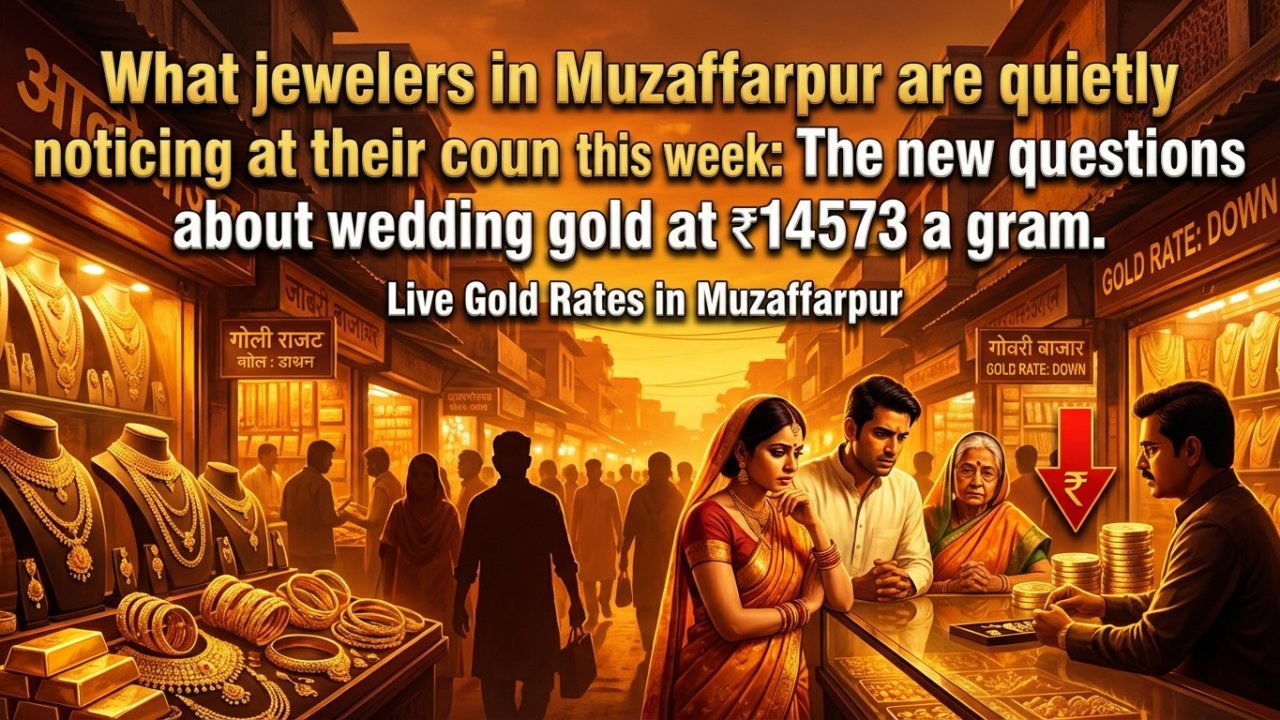
Muzaffarpur, the cultural and commercial hub of North Bihar, is not just famous for its world-renowned Shahi Litchis but also for its vibrant gold market. For generations, gold has remained the preferred investment vehicle and a symbol of prosperity for the residents of this historic city. Whether it is for a lavish wedding in the "Lagan" season or a secure investment for the future, understanding the nuances of the local gold market is essential. This comprehensive guide explores everything you need to know about buying, storing, and investing in gold in Muzaffarpur.
1. Why is gold price different in Muzaffarpur?
If you have ever compared gold prices in Muzaffarpur with those in Mumbai, Delhi, or even Patna, you might have noticed a slight variation. Several factors contribute to this price disparity. Firstly, transportation and logistics play a significant role. Since Bihar does not have a coastline, gold must be transported from major port cities or international hubs to North Bihar. The costs associated with secure transit and insurance are often passed down to the consumer.
Secondly, local taxes and octroi vary from state to state. While GST is uniform across India, other local levies and the operational costs of running a jewelry business in Muzaffarpur influence the final retail price. Furthermore, the Muzaffarpur Bullion Association plays a pivotal role in determining the daily "opening" and "closing" rates based on local demand-supply dynamics. If there is a sudden surge in demand during local festivals like Chhath Puja or the wedding season, the local premium might increase compared to other regions.
2. Which area or shop is famous for low making charges in Muzaffarpur?
For savvy shoppers in Muzaffarpur, the cost of the gold itself is only part of the equation; the "making charges" are where the real bargaining happens. The most famous area for jewelry shopping is undoubtedly Sariyaganj and Moti Jheel. These areas are the heart of the city's gold trade, housing both heritage family-run shops and modern showrooms.
If you are looking for lower making charges, the traditional shops in the Sariyaganj market are highly recommended. These jewelers often employ local artisans and have lower overhead costs compared to national brands, allowing them to offer making charges that range from 8% to 12%, whereas premium showrooms might charge 15% to 25%. Additionally, during festive seasons like Dhanteras, many shops in the Sutapatti vicinity offer "flat discounts" on making charges or even zero making charges on gold coins to attract customers. It is always advisable to compare rates between at least three different vendors in the Moti Jheel area before finalizing a purchase.
3. Why do gold prices change daily?
Gold is a global commodity, and its price in Muzaffarpur is a reflection of international market sentiments. The primary driver is the London Bullion Market Association (LBMA), which sets the global benchmark. However, several other factors ensure that the price you see on the board today might be different tomorrow:
- Currency Fluctuations: India imports the majority of its gold in US Dollars. If the Indian Rupee (INR) weakens against the Dollar, the cost of importing gold rises, leading to higher prices in Muzaffarpur.
- Interest Rates: When central banks like the US Federal Reserve increase interest rates, gold prices often drop as investors move toward interest-bearing assets. Conversely, lower rates make gold more attractive.
- Geopolitical Stability: Gold is considered a "safe haven." During times of war or global economic uncertainty, investors flock to gold, driving the price up globally and locally.
- Central Bank Reserves: When the Reserve Bank of India (RBI) increases its gold reserves, it signals a strong demand, which can push domestic prices higher.
4. Gold rates in Muzaffarpur (22 karat): How do prices change?
In Muzaffarpur, 22-karat gold, also known as "916 Purity Gold," is the most popular choice for jewelry. This is because 24-karat gold is too soft to hold intricate designs. The price of 22-karat gold is typically calculated as 91.6% of the 24-karat gold price, plus a small premium for the alloy used to harden the metal.
Prices change based on the daily market fix. In Muzaffarpur, the rates are usually updated twice a day—once in the morning and once in the evening. During the peak wedding months (usually between November and July), the 22-karat gold rate might see a "seasonal premium" due to the high volume of retail buyers. Investors should track the "Gold Rate Today Muzaffarpur" through local news or reliable financial portals to time their purchases during market dips.
5. Gold and hallmarking centres in Muzaffarpur.
Purity is the biggest concern for any gold buyer. To protect consumers, the Government of India has made BIS Hallmarking mandatory. A hallmarked piece of jewelry in Muzaffarpur will carry the BIS logo, the purity mark (e.g., 22K916), and a unique HUID (Hallmark Unique Identification) number.
Muzaffarpur has seen a rise in authorized hallmarking centers recognized by the Bureau of Indian Standards. These centers serve as third-party auditors for local jewelers. When buying gold in areas like Bhagwanpur or Moti Jheel, always insist on a laser-etched HUID. You can verify the authenticity of your gold using the "BIS Care" mobile app. These hallmarking centers ensure that the 22-karat gold you buy is indeed 91.6% pure, providing you with peace of mind and better resale value in the future.
6. Top Jewellers in Muzaffarpur.
The jewelry landscape in Muzaffarpur is a mix of trusted local legends and national retail giants. Here are some of the top destinations:
- Tanishq (Moti Jheel): Known for its exquisite designs and transparent pricing, Tanishq is a favorite for those who prioritize brand trust and modern aesthetics.
- PC Chandra Jewellers: A household name in Eastern India, they offer a wide range of traditional Bengali designs which are very popular in Muzaffarpur.
- Reliance Jewels: Located in prime commercial zones, they offer competitive rates and a vast collection of contemporary jewelry.
- Local Heritage Jewellers: Shops like Hira Panna Jewellers or long-standing family establishments in Sariyaganj have served generations of Muzaffarpur residents. These local shops are often preferred for customized bridal sets and personalized service.
7. Supply pressures pushing prices up.
Muzaffarpur’s gold market is sensitive to supply chain disruptions. Since India is not a major producer of gold, the supply is heavily dependent on import policies. If the Central Government increases the Basic Customs Duty (BCD) on gold, the immediate impact is felt in the local markets of Muzaffarpur.
Furthermore, supply pressures also arise from mining outputs in countries like South Africa and Australia. If global mining production slows down or if there are strikes in major mines, the scarcity drives up the price. Locally, during the "Shubh Muhurat" dates, the demand often outstrips the physical supply of gold coins and bars in the city, leading to local jewelers charging a "scarcity premium."
8. How to store gold in Muzaffarpur?
Once you have purchased gold, the next challenge is its safety. Residents of Muzaffarpur typically use three methods for storage:
- Bank Lockers: Most nationalized banks like State Bank of India (SBI) and Punjab National Bank (PNB) in Muzaffarpur offer locker facilities. While this is the safest option, there is an annual rental fee, and banks have limited liability.
- Home Safes: Many traditional families prefer keeping gold in heavy-duty fireproof safes. However, with rising security concerns, this is becoming less common for large quantities.
- Digital Gold: A modern alternative where you buy gold online, and it is stored in secure vaults by the seller (like MMTC-PAMP). This eliminates the risk of physical theft and storage costs.
9. Gold vs Real Estate in Muzaffarpur.
In the context of Muzaffarpur’s economy, both gold and real estate are popular. However, they serve different purposes. Real Estate in areas like Mithanpura or Ahiyapur has seen massive appreciation, but it requires a large capital outlay and is highly "illiquid"—you cannot sell a small portion of a plot if you need immediate cash.
Gold, on the other hand, offers high liquidity. You can walk into any jeweler in Sariyaganj and convert your gold into cash within an hour. Gold also acts as a better hedge against inflation. For a middle-class family in Muzaffarpur, gold is often the preferred "emergency fund," while real estate is seen as a long-term wealth creation tool.
10. What is a Sovereign Gold Bond?
For those in Muzaffarpur who want to invest in gold without the worries of storage or making charges, Sovereign Gold Bonds (SGBs) are an excellent option. Issued by the Reserve Bank of India on behalf of the Government, SGBs are "paper gold."
The benefits of SGBs include an annual interest of 2.5% (paid semi-annually) on the initial investment amount. There are no making charges or GST involved. Furthermore, if held until maturity (8 years), the capital gains are completely tax-free. You can apply for SGBs through your local bank branch in Muzaffarpur or via online banking platforms.
11. Taxation of gold in Muzaffarpur.
Understanding the tax implications is crucial for any investor. When you buy physical gold in Muzaffarpur, you must pay a 3% GST on the value of the gold plus the making charges. If you sell your gold, the tax depends on how long you held it:
- Short-Term Capital Gains (STCG): If you sell the gold within 3 years of purchase, the profit is added to your income and taxed according to your applicable income tax slab.
- Long-Term Capital Gains (LTCG): If you sell after 3 years, the profit is taxed at 20% with indexation benefits (which adjusts the purchase price for inflation).
Always ensure you keep the original tax invoice from your jeweler. This bill is essential not only for proving ownership but also for calculating your tax liability and ensuring you get the best price when selling or exchanging your gold in the future.
Conclusion: Gold remains an emotional and financial cornerstone for the people of Muzaffarpur. By staying informed about daily price triggers, choosing the right jeweler in areas like Moti Jheel, and understanding modern investment options like SGBs, you can ensure that your "yellow metal" investment continues to shine for years to come.
Navigating the Festive Gold Rush in Muzaffarpur: Expert Buying Strategies
As Muzaffarpur gears up for the vibrant festivities of Dhanteras and Chhath Puja, the local bullion markets in Saraiyaganj and Motijheel are witnessing a significant uptick in footfall. While the allure of "Shagun" gold remains a cornerstone of Bihar's cultural fabric, savvy buyers in the Shahi Lychee capital should look beyond the daily spot price. Local demand often peaks sharply just before the Kharna of Chhath Puja, which can occasionally lead to localized premiums. To secure the best value, it is advisable to monitor the 22K and 24K rates early in the morning, as Muzaffarpur’s leading jewellers typically synchronize their price boards shortly after the national bullion exchange opens.
When navigating the bustling jewelry hubs of Sutapatti, prioritizing HUID (Hallmark Unique Identification) is non-negotiable. With mandatory hallmarking norms now strictly enforced, ensure every piece—from traditional 'Mangalsutras' to contemporary bangles—features the laser-etched six-digit alphanumeric code. Furthermore, the festive season brings a wave of competitive "making charge" discounts. Experts recommend comparing the labor costs between legacy family showrooms and newer national retail chains in the city. If you are planning to exchange old family gold for new ornaments, aim to complete these transactions mid-week to avoid the weekend festive rush, ensuring a more transparent and unhurried valuation process by the local goldsmiths.
Key Takeaway: Always verify the HUID mark and compare making charges across Motijheel and Saraiyaganj showrooms to maximize your investment during the high-demand Chhath and Diwali window.
Expert Tip: Navigating Gold Recycling and Value Optimization in Muzaffarpur
As gold prices continue to oscillate near record highs, Muzaffarpur has witnessed a significant shift in consumer behavior, with gold recycling emerging as a strategic financial move for many households. In bustling commercial hubs like Moti Jheel and Sariyaganj, the traditional practice of "exchanging old for new" is undergoing a technological makeover. Local jewelers are increasingly moving away from subjective "touchstone" assessments and adopting X-ray fluorescence (XRF) spectrometry. This ensures that residents looking to liquidate or upgrade their family heirlooms receive a valuation that is precisely aligned with the city’s current 22K or 18K market rates, minimizing the "wastage" deductions that previously plagued sellers in the unorganized sector.
The refining landscape in Muzaffarpur is also maturing to meet stringent Bureau of Indian Standards (BIS) mandates. With the city serving as the primary trading node for North Bihar, local refineries and large-scale jewelry houses are streamlining the recycling process to bolster their inventory. This localized recycling loop is vital during the peak wedding seasons, as it helps stabilize the local supply chain and can lead to more competitive making charges for consumers. For those looking to recycle, it is now standard practice to seek out "Hallmark Unique Identification" (HUID) compliant centers, which guarantee that the refined output meets national purity benchmarks, protecting the asset's value for future generations.
Key Takeaway: To maximize returns on old gold in Muzaffarpur, always insist on digital purity testing rather than manual fire-assaying, and compare the "buy-back" spread across reputable dealers in the Sariyaganj market to ensure you aren't losing more than 2-4% in melting and refining margins.
Expert Insight: Maximizing Value on Gold Exchanges in Muzaffarpur
In the bustling jewelry hubs of Muzaffarpur, from the traditional lanes of Saraiyaganj to the modern showrooms in Motijheel, the "old gold vs. new gold" exchange policy is currently undergoing a significant shift. As the city aligns with national HUID (Hallmark Unique Identification) mandates, local jewellers are distinguishing heavily between legacy gold and modern hallmarked pieces. If you are looking to trade in ancestral jewelry, be aware that many prominent local family jewellers offer a "100% value exchange" only if the gold was originally purchased from their specific establishment. For gold sourced elsewhere, Muzaffarpur markets typically apply a 2% to 4% "melting charge" or purity deduction, even if the gold tests at 22K.
Recent market observations in the Sutapatti and Mithanpura areas suggest that transparency is improving thanks to the widespread adoption of digital XRF (X-ray fluorescence) testing machines. Instead of relying on the traditional touchstone method, which often led to subjective valuations, sellers can now demand a computerized purity report. To get the best deal, experts recommend timing your exchange during the first half of the day. Since Muzaffarpur’s bullion rates are influenced by both the Patna closing rates and international fluctuations, local dealers are often more flexible with exchange margins in the morning before the afternoon's peak trading volatility sets in.
Key Takeaway: To secure the highest appraisal in Muzaffarpur, always carry your original purchase invoices and prioritize jewellers who use XRF machine testing, as this eliminates the "purity haircut" often associated with manual appraisals of old gold.
Why Muzaffarpur Investors Are Shifting from Physical Gold to SGBs
For generations, the residents of Muzaffarpur have viewed physical gold as the ultimate store of value, often purchasing jewelry from local jewelers near Motijheel or Saraiyaganj as both an investment and an adornment. However, the investment landscape is shifting. As gold prices reach new peaks, savvy investors in North Bihar are increasingly turning to Sovereign Gold Bonds (SGBs) as a more efficient, secure, and profitable alternative to physical bullion.
Unlike physical gold, which carries the hidden costs of making charges—often ranging from 8% to 15%—and the persistent anxiety regarding safe storage, SGBs eliminate these burdens entirely. When you invest in SGBs, you are buying digital gold issued by the Reserve Bank of India, meaning there are no locker fees or risks of theft. Furthermore, SGBs offer an additional 2.5% annual interest paid semi-annually on your initial investment, a benefit you simply cannot get from a gold coin or necklace sitting in a bank locker.
For the Muzaffarpur investor, the tax advantage is equally compelling. While the capital gains on physical gold are taxable, the capital gains arising on redemption of SGBs are tax-exempt for individuals if held until maturity. By choosing the digital route, you not only hedge against market volatility but also enjoy a steady passive income stream, making SGBs a smarter financial strategy for long-term wealth creation in the current economic climate.
Key Takeaway: Transitioning from physical gold to SGBs allows Muzaffarpur residents to bypass making charges and storage risks while earning a guaranteed 2.5% annual interest, effectively turning a static asset into a productive, tax-efficient investment.
Navigating Gold Loan Options in Muzaffarpur: A Strategic Financial Move
For residents of Muzaffarpur, gold is far more than a cultural asset—it is a powerful financial tool. As gold prices fluctuate, many households in the city are increasingly leveraging their idle jewelry to secure liquidity through gold loans. With a robust network of both organized banking institutions and non-banking financial companies (NBFCs) spread across key areas like Saraiyaganj and Mithanpura, accessing credit has become remarkably streamlined. These institutions typically offer loan-to-value (LTV) ratios that allow borrowers to unlock up to 75% of their gold's current market value, providing a quick solution for business capital, educational expenses, or medical emergencies.
However, choosing the right lender requires more than just looking for the lowest interest rate. In a bustling trade hub like Muzaffarpur, it is essential to compare the processing fees, storage security protocols, and the flexibility of repayment schedules. While national banks often provide lower interest rates, local branches of specialized gold loan companies offer faster turnaround times and doorstep services, which can be a significant convenience. Before pledging your ornaments, ensure you are aware of the current valuation standards used by the lender, as these can vary based on the purity of the gold and the prevailing market sentiment in the Muzaffarpur bullion market. Always prioritize lenders who provide transparent insurance coverage for your pledged assets while they are in their vault.
Key Takeaway: When opting for a gold loan in Muzaffarpur, prioritize lenders who offer transparent appraisal processes and flexible repayment tenures; always compare the effective annual percentage rate (APR) rather than just the base interest rate to ensure you are getting the most cost-effective credit.
Understanding Gold Price Variations: Why Muzaffarpur Differs from Metro Hubs
Investors and jewelry buyers in Muzaffarpur often notice a distinct gap between local gold rates and those quoted in major metropolitan hubs like Mumbai, Delhi, or Chennai. While the global spot price of gold remains a universal benchmark, the final retail price in Bihar’s commercial heart is influenced by a unique set of logistical and market-driven factors. Unlike the primary bullion centers that serve as entry points for gold imports, Muzaffarpur relies on a secondary distribution network, which incorporates additional transportation costs and regional handling fees that are eventually reflected in the local price.
Furthermore, the gold market in Muzaffarpur is deeply influenced by localized supply-demand dynamics, particularly during peak wedding seasons and regional festivals like Chhath Puja or Diwali. Since local jewelers often procure stock from larger wholesalers in Kolkata or Delhi, the "landed cost" includes these inland logistical premiums. Additionally, regional variations in the local jeweler association’s making charges and competitive pricing strategies can cause slight fluctuations that deviate from the national trend. It is essential for buyers to understand that while the base rate might appear higher than in a metro city, the value proposition often lies in the hallmark quality and the competitive making charges offered by trusted local artisans.
Key Takeaway: While Muzaffarpur’s gold prices may occasionally trend higher than major metro cities due to logistical overheads and regional distribution costs, local buyers should prioritize hallmarked (BIS) gold and compare making charges to ensure they are getting the best overall value rather than focusing solely on the base bullion rate.
Timing Your Gold Purchase: Strategic Insights for Muzaffarpur Buyers
For residents of Muzaffarpur looking to invest in physical gold, timing is often as critical as the price per gram itself. While global market fluctuations dictate the baseline cost, local gold rates in Muzaffarpur are typically updated by the local bullion association in the morning. Consequently, visiting reputable jewelers along Saraiyaganj or Motijheel after the mid-day rate stabilization is often the most strategic move. By waiting until the afternoon, buyers ensure that the day's volatility has settled, allowing them to make purchasing decisions based on a firm, finalized price rather than an early-morning estimate.
Furthermore, local market dynamics play a significant role. Visiting during off-peak hours—typically between 12:00 PM and 3:00 PM—often allows for a more personalized experience with jewelers. During these quieter windows, you are more likely to receive undivided attention, which is invaluable when inspecting hallmark purity, negotiating making charges (wastage), and verifying the weight of intricate designs. Avoiding the late-evening rush not only minimizes the chance of buying in haste but also allows you to compare the day's competitive offers across different established showrooms in the city, ensuring you secure the best value for your capital.
Key Takeaway: To secure the best deal in Muzaffarpur, aim to visit your preferred jeweler in the early afternoon; this allows you to act on the day’s settled bullion rate while benefiting from a more relaxed environment for negotiating making charges.
Beyond Gold: The Growing Allure of Silver in Muzaffarpur
While gold has traditionally dominated the investment portfolios of households in Muzaffarpur, local market trends indicate a subtle yet significant shift. As gold prices reach historical highs, many savvy investors in the region are increasingly turning to silver—not just as an ornamental metal for festivals and weddings, but as a strategic asset for wealth diversification. In the bustling markets of Saraiyaganj, local jewelers are reporting a steady uptick in demand for silver bars and coins, driven by its lower entry price point and its dual utility as both a precious metal and a vital industrial commodity.
The volatility in gold prices has led many middle-income families in Muzaffarpur to reconsider their hedging strategies. Silver offers a lower barrier to entry, allowing investors to accumulate wealth in smaller, more manageable increments. Furthermore, as the local economy in Bihar continues to modernize, the industrial demand for silver in electronics and solar technologies adds a layer of price support that differs from gold’s purely monetary appeal. For residents looking to balance their portfolios, silver is emerging as a practical, high-potential alternative that complements traditional gold holdings without requiring a substantial capital outlay.
Key Takeaway: Investors in Muzaffarpur should view silver as a strategic "affordable hedge." By allocating a portion of their precious metal budget to silver, local investors can benefit from lower volatility entry points and a unique industrial growth narrative that gold alone does not provide.
Protecting Your Assets: Navigating Gold Insurance in Muzaffarpur
As gold prices continue to fluctuate, residents of Muzaffarpur are increasingly viewing their jewellery not just as cultural adornment, but as a critical financial hedge. However, with the rising incidence of urban property crime in growing hubs like Mithanpura and Chandwara, relying solely on home lockers or traditional safes is no longer sufficient. Securing a dedicated insurance policy for your gold jewellery is a prudent step to safeguard your wealth against theft, burglary, and accidental damage.
In Muzaffarpur, many leading private and public sector insurers offer "Jewellery Insurance" riders that can be added to existing home insurance policies. Unlike standard bank locker agreements, which often provide limited liability in the event of a breach, a comprehensive jewellery policy covers the current market value of your gold. When selecting a plan, it is vital to ensure that the policy includes "new for old" replacement clauses and provides coverage for items while they are being worn outside the home during festive seasons or wedding ceremonies, which are peak times for gold movement in the city.
Before finalizing a policy, always ensure your jewellery has been professionally appraised by a certified valuer in Muzaffarpur. Most insurance companies require recent purchase invoices or a detailed valuation certificate to process claims efficiently. By documenting your collection and opting for adequate coverage, you transform your gold from a vulnerable asset into a truly protected investment.
Key Takeaway: Don’t assume your bank locker or home safe provides total protection; invest in a dedicated jewellery insurance policy that covers your gold at its current market value, ensuring you have professional appraisals and clear documentation ready for any potential claims.
Silver: The Strategic Alternative for Muzaffarpur Investors
While gold remains the cornerstone of investment portfolios in Muzaffarpur, local market trends indicate a growing shift toward silver as a high-potential alternative. As the industrial and festive demand in Bihar continues to evolve, silver is increasingly viewed not just as a commodity for jewelry, but as a strategic hedge against market volatility. For investors in Muzaffarpur, silver offers a lower entry point compared to gold, allowing for greater volume accumulation and higher liquidity during short-term price fluctuations.
Market analysts observing the trends in Muzaffarpur's bustling bullion hubs note that silver’s performance is becoming more closely tied to global industrial demand, providing a different risk-reward profile than the traditional "safe haven" status of gold. Investors are increasingly diversifying their holdings by allocating a portion of their capital to silver bars and coins, particularly during the wedding season and auspicious festivals like Chhath Puja and Diwali. This tactical pivot allows local participants to capitalize on the metal’s inherent price beta, which often outpaces gold during periods of economic expansion.
For those looking to balance their portfolios, the current market climate suggests that silver serves as an excellent buffer. By monitoring local Muzaffarpur spot rates alongside global trends, savvy investors can exploit price corrections to build a robust foundation of white metal, ensuring their overall asset mix remains resilient against inflationary pressures while maintaining the flexibility to liquidate quickly when market conditions are favorable.
Key Takeaway: Silver offers Muzaffarpur investors a lower-cost entry point and higher volatility potential compared to gold, making it an essential tool for portfolio diversification and capital growth in a shifting economic landscape.
Expert Tip: Mastering Making Charges at Muzaffarpur Jewellers
When purchasing gold jewellery in Muzaffarpur, understanding 'making charges' is as crucial as knowing the daily gold rate. These charges represent the cost of crafting the raw gold into the beautiful pieces you admire, covering the labour, design complexity, and artisan skill. In a city like Muzaffarpur, known for its blend of traditional and contemporary designs, these charges can vary significantly – often ranging from 8% to 25% or even more for highly intricate, handmade items, or sometimes quoted as a flat rate per gram. It's a significant component of your final bill, separate from the gold's weight and purity.
Navigating these charges requires a strategic approach. Firstly, always enquire about the making charge percentage or per-gram rate upfront. Don't hesitate to visit 2-3 jewellers, perhaps exploring options around Kalambagh Chowk or Motijheel, to compare their quoted making charges for similar designs. While some branded showrooms might have fixed rates, many independent jewellers in Muzaffarpur are open to negotiation, especially for simpler designs or if you are making a substantial purchase.
When negotiating, focus on the design's complexity. Simpler, machine-made items often have more room for negotiation on making charges than intricate, handcrafted pieces that demand exceptional skill and time. Ask for a clear breakdown of the gold weight, gold price, and making charges to ensure transparency. Building a relationship with a trusted local jeweller can also lead to better deals and loyalty discounts over time.
Key Takeaway: Always compare quotes, understand the breakdown of charges, and confidently negotiate, especially for simpler designs, to ensure you get the best value for your gold jewellery in Muzaffarpur.
Leveraging Gold Assets: A Strategic Financial Tool in Muzaffarpur
For residents of Muzaffarpur, gold is far more than just a traditional store of value; it is an accessible financial lever during times of liquidity needs. As the city continues to emerge as a key commercial hub in North Bihar, the availability of gold loans has surged across local branches of nationalized banks and specialized non-banking financial companies (NBFCs) located near Saraiyaganj and Motijheel. Unlike unsecured personal loans that demand rigorous credit checks, a gold loan allows Muzaffarpur’s investors and small business owners to unlock the dormant capital tied up in their jewelry with minimal documentation and rapid processing times.
However, navigating the gold loan landscape requires a discerning eye. Before pledging your family heirlooms, it is essential to compare the "Loan-to-Value" (LTV) ratios offered by different institutions. While some lenders may lure customers with lower interest rates, they might impose hidden processing fees or valuation charges that inflate the total cost of borrowing. We recommend that Muzaffarpur residents keep a close watch on the daily purity-based valuation of 22-karat gold, as lenders adjust their loan amounts based on these fluctuating market rates. Opting for a lender that offers flexible repayment schedules—such as interest-only payments during the tenure with a bullet repayment of the principal—can be particularly advantageous for local traders managing seasonal cash flows.
Key Takeaway: Prioritize lenders that offer transparent valuation processes and flexible repayment structures, and always ensure your gold is weighed and appraised in your presence to secure the most favorable loan amount against your assets.
Ensuring Authenticity: Verifying Gold Purity in Muzaffarpur
As gold remains a cornerstone of investment and cultural tradition in Muzaffarpur, from the bustling lanes of Saraiyaganj to the local jewelry hubs, ensuring the authenticity of your purchase has never been more critical. With the rise of hallmarked jewelry, buyers are increasingly protected, but the responsibility remains with the consumer to verify that the gold they are buying meets the standards promised by the jeweler. The most reliable tool at your disposal is the official BIS Care App, a government-backed initiative designed to empower consumers across Bihar.
To verify your jewelry, simply download the BIS Care App and navigate to the 'Verify HUID' section. Every piece of hallmarked gold now carries a unique six-digit alphanumeric code known as the Hallmark Unique Identification (HUID) number. By entering this code, you can instantly retrieve the jeweler’s registration details, the purity of the gold (e.g., 22K916 for 22-carat), and the date of hallmarking. This digital verification adds a vital layer of transparency to your transaction, ensuring that the gold you purchase in Muzaffarpur is exactly as described, safeguarding your hard-earned savings against potential impurities or unauthorized marks.
Key Takeaway: Always insist on a hallmarked invoice and use the BIS Care App to verify the unique HUID number before leaving the store; this simple digital check is your best defense against fraud and guarantees the purity of your gold investment.
Expert Tip: Safeguarding Your Gold – Insurance Options for Jewellery in Muzaffarpur
For residents of Muzaffarpur, gold jewellery isn't just an investment; it's often a cherished heirloom, a symbol of tradition, and a significant asset. While the daily gold price keeps you informed about its market value, protecting this precious possession from unforeseen circumstances like theft or accidental loss is equally crucial. This is where comprehensive jewellery insurance comes into play, offering invaluable peace of mind.
When considering insurance for your gold in Muzaffarpur, you typically have two main avenues. Firstly, many home insurance policies offer coverage for valuable items, including jewellery, often with a specified limit. It's vital to declare your gold's value accurately and understand the sub-limits for jewellery within your home policy. Alternatively, specialized jewellery insurance policies provide more extensive and dedicated coverage, often without the high deductibles associated with general home insurance claims. Regardless of the option, ensure your policy covers risks pertinent to our region, such as theft, burglary, and accidental damage or loss.
To ensure adequate coverage, always get your jewellery professionally valued by a reputable local jeweler in Muzaffarpur. Keep all purchase receipts and valuation certificates meticulously. Review your policy annually, especially as gold prices fluctuate, to ensure your sum insured reflects the current market value. Engaging with local insurance agents can also be beneficial, as they often have a better understanding of regional security concerns and can guide you towards policies best suited for your specific needs in Muzaffarpur. Don't wait for an unfortunate event; proactive protection is key.
Key Takeaway: Secure your gold jewellery in Muzaffarpur by opting for tailored insurance, ensuring accurate valuations, and meticulously documenting your possessions to protect their financial and sentimental value.